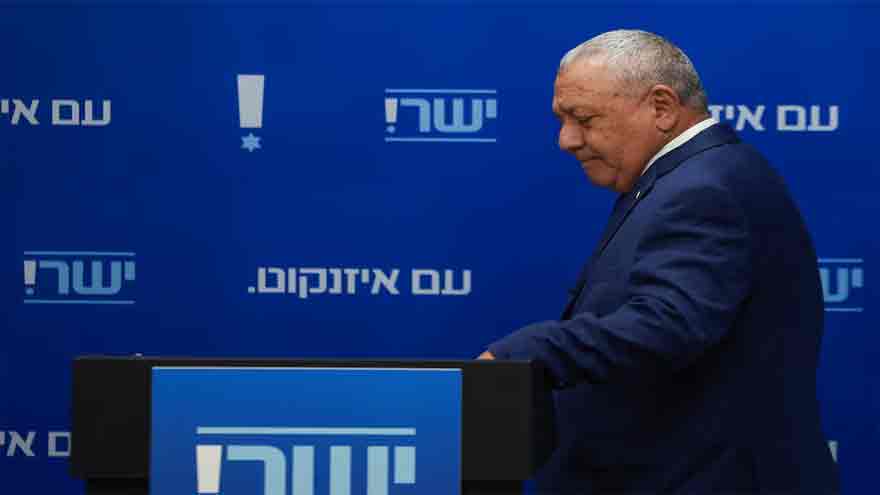
JERUSALEM — Former military chief Gadi Eisenkot has secured the first coalition agreement of Israel’s post-election negotiations, signing a pact with right-wing opposition leader Avigdor Lieberman as he races to assemble a government before his mandate expires.
Eisenkot’s center-right Yashar party said the two men met on Tuesday and reached a deal shortly afterward — the first formal alliance struck since the October 27 election. The agreement pairs Yashar’s 21 Knesset seats with the 7 held by Lieberman’s Israel Our Home party.
A Surprising Partnership
The tie-up was something of a surprise. Lieberman had been outspoken against forming a government reliant on support from Arab parties, and equally opposed to a unity government with Prime Minister Benjamin Netanyahu. But he has also made clear that his central aim is to remove Netanyahu from power — a goal he now shares with Eisenkot.
The October election stripped Netanyahu’s right-wing Likud bloc of its majority, despite outperforming expectations. Likud’s alliance with far-right and ultra-Orthodox parties now controls 53 of the Knesset’s 120 seats.
Eisenkot’s patchwork coalition, including Lieberman, commands just 48 seats. But the parties representing Israel’s Arab minority — holding 19 seats and fiercely opposed to Netanyahu — could provide the additional support needed to reach a majority.
Deadline Looms
President Isaac Herzog tasked Eisenkot with forming a government, while Netanyahu remains caretaker prime minister. Eisenkot has until December 6 under a 28-day mandate, though he may request a 14-day extension. Should he fail, Netanyahu would be given an opportunity to form a government. If neither succeeds, Israel would head to another election next year.
Complicating the picture, talks are also underway between Eisenkot, some of his “change bloc” partners and Likud on a possible unity government.
Democrats Suspend Talks
The left-wing Democrats party, which holds 8 seats, said separately that it was suspending negotiations with Eisenkot. It cited progress in his talks with Likud on a unity government and “the deadlock in negotiations to form a ‘change government.'”
Democrats leader Yair Golan has said he prefers a government without Netanyahu that includes the Arab parties.
- Likud-led bloc: 53 seats
- Eisenkot coalition partners: 48 seats
- Arab minority parties: 19 seats
- Democrats: 8 seats
With the clock ticking toward December 6, Eisenkot’s first coalition deal marks a critical step — but the arithmetic of Israeli politics leaves the path to a majority as narrow as ever.