The city of Jacobabad in Pakistan, often recognized as one of the hottest places on Earth, faces a daunting challenge as US President Donald Trump’s freeze on foreign aid jeopardizes a crucial water supply project. Non-governmental organization HANDS has expressed concern over the potential collapse of this vital scheme, which provides clean drinking water to residents suffering from extreme heatwaves and water scarcity.
Jacobabad’s temperatures frequently soar above 50 degrees Celsius, posing severe health risks such as dehydration and heat-related illnesses. In 2012, the United States Agency for International Development (USAID) pledged $66 million to enhance municipal services across the Sindh province, including the development of a water purification plant. This plant pumps and treats water from a canal located 22 kilometers away to serve the city’s population.
However, the recent aid suspension has put $1.5 million of crucial funding on hold, casting uncertainty over the project’s sustainability. HANDS warns that the water supply could be compromised within months without this financial support. The project currently delivers approximately 1.5 million gallons of water daily, providing relief to about 350,000 residents in a region marked by pervasive poverty.
The abrupt suspension of aid, reportedly discovered through media reports, has forced HANDS to withdraw its staff and halt services critical to maintaining the water supply. Forty-seven employees have been sent home, including specialists responsible for water purification and infrastructure maintenance. Without intervention from another funding source, the project risks becoming “a total failure,” according to HANDS CEO Shaikh Tanveer Ahmed.
The local government, now overseeing the project, lacks the technical expertise and revenue collection capabilities that HANDS was developing to ensure the water supply’s sustainability through billing rather than donations.
The international aid sector is reeling from the impact of Trump’s policy shifts, particularly his administration’s decision to significantly reduce or dismantle parts of the US government, including USAID. Despite being a major player in global humanitarian efforts with a $42.8 billion budget, USAID’s funding represents a small fraction of the overall US government expenditure.
President Trump has criticized USAID, labeling it as being managed by “radical lunatics,” while his top donor, Elon Musk, has condemned the agency as a “criminal organization.”
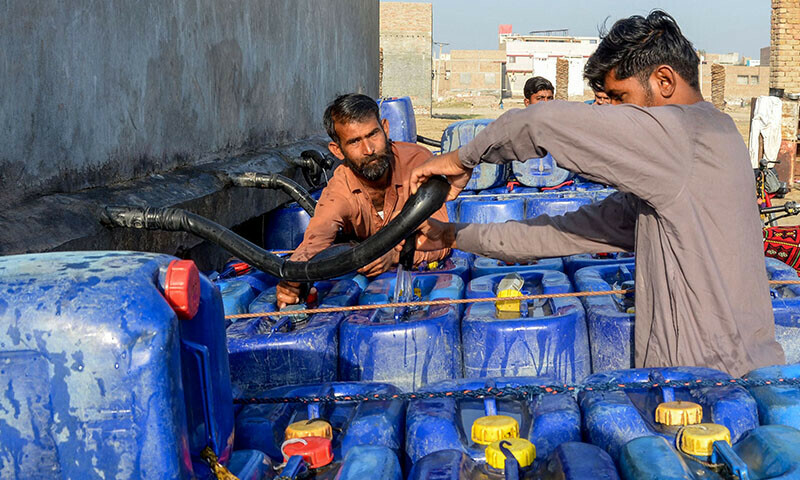
Residents of Jacobabad, like 25-year-old Tufail Ahmed, emphasize the importance of the water project for survival in the city’s harsh climatic conditions. Water scarcity has historically forced women to travel long distances to collect water, a burden now eased by the plant’s supply. However, fears persist that the water supply’s discontinuation could force residents to rely on expensive and often contaminated private water sources.
The situation underscores the broader climate challenges faced by Pakistan, which ranks as one of the countries most affected by climate change impacts. Recent years have seen devastating floods and extreme weather conditions, exacerbating the country’s vulnerabilities. As Pakistan contributes minimally to global greenhouse gas emissions, its leaders have consistently called for greater international support to aid its population enduring the front lines of climate change.