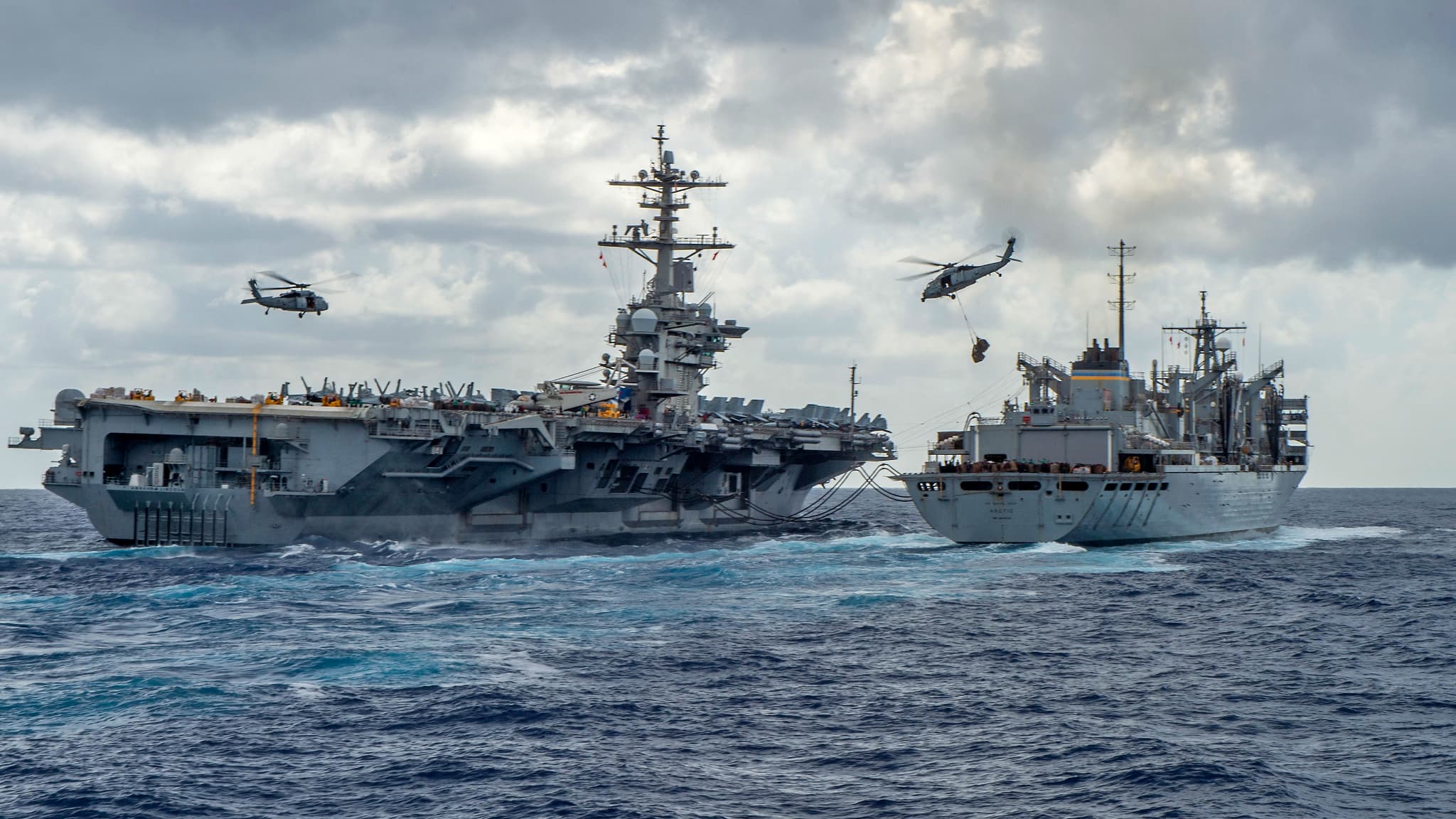
The United States has positioned the USS Abraham Lincoln aircraft carrier strike group in the Persian Gulf, a significant naval deployment near Iran that underscores heightened regional tensions. The move follows President Donald Trump’s announcement of sending a naval “armada” toward Tehran.
Naval Deployment and Diplomatic Signals
U.S. Central Command (CENTCOM) confirmed the carrier group’s arrival in the Middle East on Monday, stating it was deployed from the South China Sea to “promote security and stability.” The deployment comes after a period of violent crackdowns on protests within Iran.
In an interview with Axios, President Trump noted the U.S. now has “a great armada near Iran” and suggested Iranian leaders desire negotiations. “They want to make a deal. I know. They’ve called numerous times. They want to talk,” Trump stated. While previously threatening strikes over Iran’s internal repression, Trump indicated a pullback after claiming Tehran halted planned executions of protesters.
US Conditions for Dialogue
According to U.S. officials speaking to Axios, any potential agreement with Iran would require comprehensive terms, including:
- The removal of all enriched uranium from Iran
- Restrictions on long-range missile stockpiles
- Cessation of support for regional proxy forces
A senior U.S. official, speaking anonymously to reporters, said, “We are open to any discussions. If they want to contact us, as long as they know the conditions, we are ready to talk.” The official added that these conditions have been communicated since the start of the Trump administration.
Iran’s Defiant Response
Iranian authorities issued a warning against U.S. intervention prior to CENTCOM’s announcement. Foreign Ministry spokesman Esmail Baghaei stated, “The arrival of such a warship will not affect Iran’s determination… to defend the nation,” in an apparent reference to the carrier. He emphasized the Islamic Republic’s confidence in its own capabilities.
The region remains fragile following a 12-day war between Iran and Israel in June 2025, which included U.S. strikes on Iranian nuclear sites. Iran’s government, already weakened by that conflict, has faced unprecedented domestic unrest since December, with human rights groups reporting nearly 6,000 deaths during the suppression of widespread economic protests.