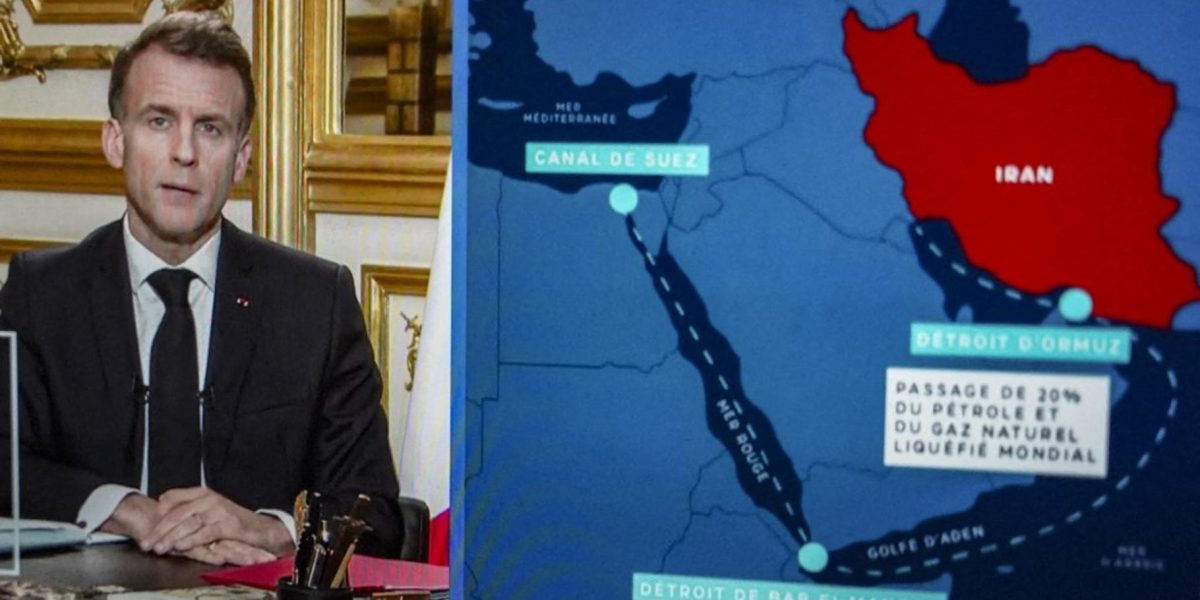
A public Instagram message to President Emmanuel Macron has crystallized a fierce political and legal debate in France. “Can you please remove the war? Because you have opened your mouth too much, I think. And actually, I haven’t finished living,” wrote a user named Fatima. The Élysée’s decision to publish Macron’s reply—”France is not part of this war. We are not in combat and we will not engage in this war”—underscores an effort to defuse a politically explosive question: Is France, through its military support for Gulf allies, becoming a co-belligerent against Iran?
Military Deployments Draw Scrutiny
The controversy follows a series of announcements. On March 3, Macron detailed the deployment of the aircraft carrier Charles de Gaulle to the Mediterranean, accompanied by Rafale fighter jets, air defense systems, and the frigate Languedoc. By March 5, authorization was granted for U.S. aircraft to use the French airbase in Istres. Hours later, responding to a Lebanese request amid Israeli strikes, France pledged “armored transport vehicles as well as operational and logistical support” to Lebanon.
While support for Lebanon is uncontroversial, other moves have drawn fire. Jean-Luc Mélenchon of La France Insoumise (LFI) called U.S. access to Istres “unacceptable because it associates France with the aggression of Iran.” He warned, “we could be considered co-belligerents.” LFI’s Clémence Guetté echoed the concern on RTL radio, questioning the purpose of the Charles de Gaulle’s deployment and the U.S. presence, demanding a parliamentary debate.
The Legal Tightrope of “Co-Belligerence”
The term “co-belligerence” is not formally defined in international humanitarian law, but legal precedents outline criteria for when a state becomes a party to a conflict. According to experts, providing financing, equipment, intelligence, or training to a party’s forces does not, by itself, constitute co-belligerence.
However, a state may be deemed involved through direct or indirect military engagement, such as planning another state’s operations, or by “making its own military bases available to allow foreign troops to penetrate the territory of the state in conflict.” This latter point directly echoes the situation at Istres base.
Anticipating this, the French military high command secured “complete guarantees” from the U.S. that aircraft at Istres would have only a “support” role, specifically for refueling, with “no participation whatsoever in U.S. operations in Iran.” This preemptive move is seen as a legal safeguard to avoid Iranian accusations and potential retaliation.
Government Insists on Purely Defensive Posture
The government has strenuously defended its actions as defensive. Armed Forces Minister Catherine Vautrin stated the deployed Rafales are meant to “intercept drones.” She framed the provision of air defense systems to Qatar, Kuwait, and the UAE as honoring pre-existing mutual defense agreements. “When we say we have a defense agreement, we are asked to activate it, we activate it. That is the reliability of the French word,” Vautrin argued.
Macron’s final response to public concern sought to draw a clear line: “France is not waging war in this region. It protects the French, its allies, and it stands alongside Lebanon and its sovereignty and territorial integrity. No more, no less.” The administration aims to avoid a domestic political quagmire as it seeks to maintain a diplomatic role in regional de-escalation.