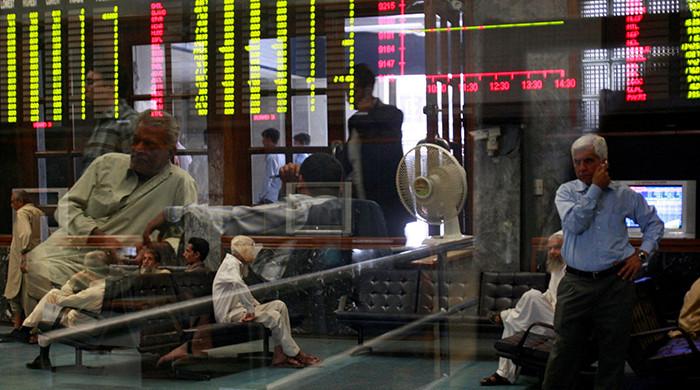
The Pakistan Stock Exchange (PSX) suffered a historic collapse on Monday, with the benchmark KSE-100 index plunging more than 10,000 points as escalating war in the Middle East sent global oil prices skyrocketing and triggered a massive investor sell-off.
Historic Plunge Triggers Trading Halt
The carnage began at the opening bell, with the KSE-100 index plummeting by 12,375.17 points, or 7.98%, to an intraday low of 144,929.84 points. This followed a devastating week where the index had already lost 10,566 points, or 6.3%, due to the expanding US-Israel conflict with Iran. The rapid descent forced an automatic suspension of trading under the exchange’s risk-management rules after the KSE-30 Index fell by 5%.
Oil Price Shock and “War Premium”
The trigger for the panic was a seismic surge in global oil prices, which spiked over 30% to levels not seen since the 2022 Russian invasion of Ukraine. Both West Texas Intermediate and Brent crude soared past $118 per barrel after Iran carried out retaliatory strikes against Gulf oil producers.
“The pressure is obvious due to war premium and 100 plus oil prices derailing macro stability with no signs of ceasefire,” said an independent economic analyst. The spike compounds existing investor fears over extended tech valuations and massive AI spending.
Regional Conflict with Global Repercussions
Fears that the conflict could be prolonged intensified after US President Donald Trump stated only the “unconditional surrender” of Iran would end the war, calling the oil price spike a “small price to pay” to eliminate Iran’s nuclear threat. This sent shockwaves through Asian markets, which also plunged on Monday.
Market Outlook and Attractive Valuations
Analysts expect cautious, volatile trading in the coming days as markets assess the triple threat of geopolitical tensions, inflation trends, and central bank interest rate decisions. The State Bank of Pakistan’s Monetary Policy Committee meeting is being closely watched.
Despite the crash, some analysts note the market now trades at a price-to-earnings ratio of about 8.1 times with a dividend yield of around 6.3%, which they view as attractive at these depressed levels. Research firm AHL identified several sectors where fundamentals remain supportive despite the extreme volatility.
The trading halt was lifted after a pre-open session, with the market reopening at 10:27 AM local time. However, with oil prices up more than 75% since the war began and no diplomatic resolution in sight, analysts warn of continued turbulence ahead for Pakistan’s financial markets.