U.S. Supreme Court justices, with President Donald Trump in attendance, signaled deep skepticism on Wednesday toward the legality of his executive order aiming to restrict birthright citizenship, a cornerstone of his hardline immigration agenda that challenges a century-old interpretation of the Constitution.
A Historic Presidential Presence
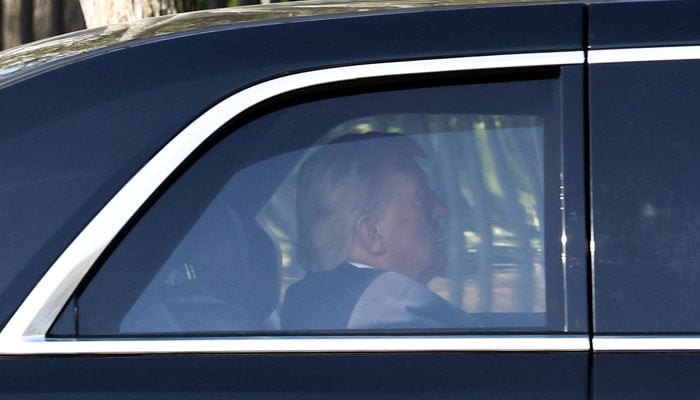
Trump made history by becoming the first sitting president to attend a Supreme Court oral argument. Dressed in a dark suit and red tie, he sat in the front row of the public gallery for over an hour before departing midway through the proceedings. The case centers on the administration’s appeal of a lower court ruling that blocked Trump’s directive, which sought to deny automatic citizenship to children born in the U.S. if neither parent is a citizen or legal permanent resident.
Constitutional Clash Over the 14th Amendment
The legal battle hinges on the 14th Amendment’s Citizenship Clause, ratified in 1868, which states: “All persons born or naturalized in the United States, and subject to the jurisdiction thereof, are citizens of the United States.” For generations, this has been understood to guarantee citizenship to nearly everyone born on U.S. soil.
The Trump administration argues the phrase “subject to the jurisdiction thereof” excludes children of immigrants who are in the country illegally or on temporary visas. Solicitor General D John Sauer contended that automatic birthright citizenship “demeans the priceless and profound gift of American citizenship” and acts as a “powerful pull factor for illegal immigration.”
Justices Grill Administration Lawyer
Justices across the ideological spectrum raised pointed questions. Conservative Chief Justice John Roberts called the administration’s legal theory “quirky,” questioning how it could expand from narrow historical exceptions—like children of enemy soldiers—to exclude a vast population.
“I’m not quite sure how you can get to that big group from such tiny and sort of idiosyncratic examples,” Roberts said. He also pressed Sauer for evidence on “birth tourism,” a cited concern, to which Sauer replied, “No one knows for sure.”
Liberal Justice Elena Kagan noted the administration was relying on “pretty obscure sources” for its interpretation, which she suggested was unsupported by the amendment’s text.
Defenders of the Status Quo
Arguing for the challengers, American Civil Liberties Union attorney Cecillia Wang stated, “Ask any American what our citizenship rule is and they will tell you, ‘Everyone born here is a citizen, alike.’ That rule was enshrined in the 14th Amendment to put it out of the reach of any government official to destroy.”
The lower court found the order violated both the 14th Amendment and federal statutes. A ruling from the Supreme Court, where conservatives hold a 6-3 majority, is expected by the end of June.