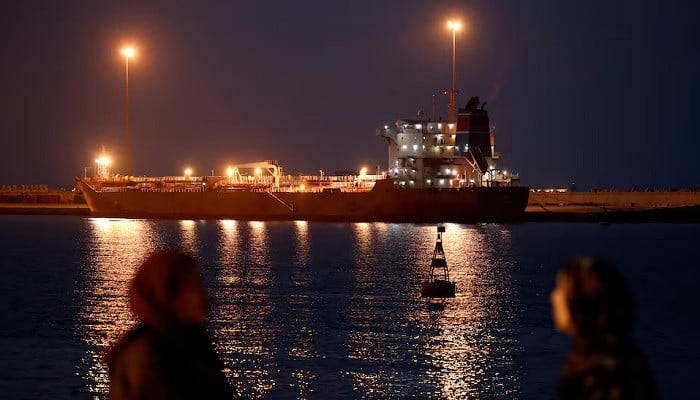
Global crude oil prices surged on Monday, extending last week’s dramatic gains, as the ongoing U.S.-Israeli conflict with Iran continues to severely disrupt shipping through the critical Strait of Hormuz, choking off a major artery for the world’s oil supply.
Markets in Panic as Key Chokepoint Remains Blocked
Brent crude futures rose 1.6% to $110.74 a barrel, while U.S. West Texas Intermediate (WTI) crude gained 0.6% to $112.25. This follows Thursday’s volatile session—the last trading day before the Good Friday holiday—where WTI jumped over 11% and Brent soared nearly 8%, marking their largest single-day price surges since 2020.
The catalyst remains the strategic Strait of Hormuz, a narrow passage through which a significant portion of the world’s seaborne oil transits. Since the conflict began on February 28, Iranian attacks on shipping have largely closed the strait, blocking exports from major producers like Iraq, Saudi Arabia, Qatar, Kuwait, and the United Arab Emirates.
Refiners Scramble, Trump Threatens Escalation
The supply shock has forced global refiners to aggressively seek alternative crude sources, particularly from the U.S. Gulf Coast and the UK North Sea. “Global buyers are bidding aggressively for (U.S.) Gulf Coast barrels, and Brent is rallying even faster,” noted analysts at the Schork Group.
Tensions escalated further on Sunday when former U.S. President Donald Trump issued a stark threat via social media, vowing to target Iran’s power plants and bridges if the Strait of Hormuz is not reopened. Despite the blockade, shipping data indicates Iran has allowed selective passage for vessels from countries it considers friendly, including an Omani tanker and a French container ship.
Ceasefire Stalls as OPEC+ Increase Remains Theoretical
Diplomatic efforts to end the conflict have reportedly reached a dead end, with Iran refusing to meet U.S. officials for talks in Islamabad, according to the Wall Street Journal. This prolongs the market uncertainty.
In response to the crisis, the OPEC+ alliance, which includes Russia, agreed on Sunday to a modest nominal production increase of 206,000 barrels per day for May. However, analysts note this decision is largely symbolic, as several key members embroiled in the war are physically unable to raise output. Furthermore, Russian supply has faced its own disruptions from Ukrainian drone attacks on its Baltic Sea export terminals.
The prolonged closure of the Strait of Hormuz and the escalating geopolitical rhetoric continue to inject extreme volatility into global energy markets, with no immediate resolution in sight.