President Acknowledges Economic Pain, Unveils Aggressive New Tactic
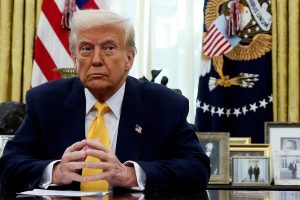
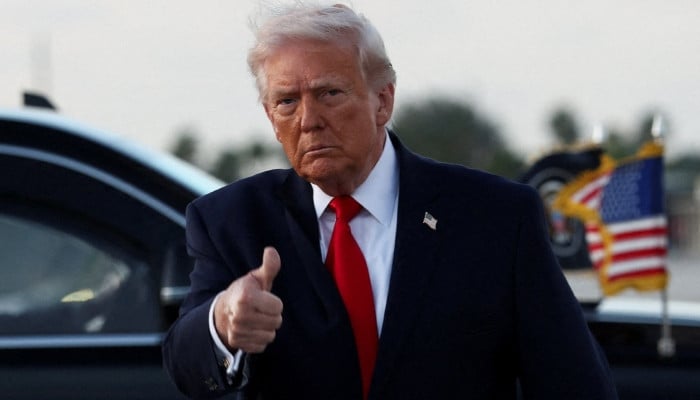
In a rare admission of potential political fallout, President Donald Trump stated that high oil and gasoline prices may persist through November’s midterm elections. The comments, made during a Fox News interview from Miami, come six weeks after the US initiated a joint bombing campaign with Israel against Iran—a conflict that has since roiled global energy markets.
“It could be, or the same, or maybe a little bit higher, but it should be around the same,” Trump said when asked if fuel costs would decline by fall. This marks a shift from weeks of White House assertions that the price spike was a short-term phenomenon. Data from GasBuddy shows the average price for regular gasoline has remained above $4 per gallon for most of April.
Blockade Announcement Follows Failed Peace Talks
Earlier on Sunday, Trump escalated the confrontation by announcing a US Navy blockade of the Strait of Hormuz. The move, declared on Truth Social, targets any vessel paying a transit fee to Iran.
“No one who pays an illegal toll will have safe passage on the high seas,” Trump wrote. The decision followed marathon weekend talks between US and Iranian officials in Islamabad, Pakistan, which concluded without a peace agreement. Iran had previously closed critical lanes in the strait, causing global oil prices to surge approximately 50%.
Any US blockade injects further uncertainty into a conflict currently under a fragile two-week ceasefire. The Strait of Hormuz is a vital chokepoint for global oil shipments, with about one-fifth of the world’s supply passing through it.
Domestic Political Repercussions Mount
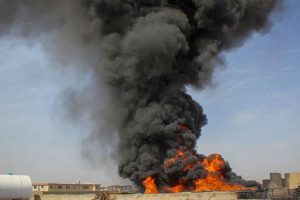
The war, which began on February 28, has expanded to involve Iranian allies and triggered massive Israeli strikes against Hezbollah in Lebanon. The conflict has resulted in thousands of civilian casualties and significant financial market volatility.
Trump’s political standing has deteriorated as a result. Recent polls indicate the war is unpopular with most Americans, who primarily cite rising gasoline prices as a key concern. The president’s approval rating has sunk to the lowest point of his second term, sparking Republican fears of losing congressional control in the upcoming midterms.
A Democratic majority in either chamber could initiate investigations into the administration and stall Trump’s legislative agenda.
Democratic Senator Questions Blockade Strategy
Senator Mark Warner (D-Va.), the ranking Democrat on the Senate Intelligence Committee, publicly challenged the logic behind the planned blockade.
“I don’t understand how blockading the strait is going to somehow push the Iranians into opening it,” Warner said on CNN’s “State of the Union.” He elaborated on CBS’s “Face the Nation,” noting Iran retains significant capacity to disrupt shipping despite a US presence.
“The Iranians have hundreds of speedboats where they can still mine the strait or put bombs against tankers,” Warner said. “How is that going to ever bring down gas prices?”
Republican Senator Warns of Long Conflict
Despite Trump’s repeated assurances of a swift resolution, Senator Ron Johnson (R-Wis.) offered a more sober assessment on ABC’s “This Week.”
“It’s going to be a long-term project,” Johnson said of achieving US objectives in Iran. “I never thought this would be easy.” He was not asked specifically about the proposed naval blockade during the interview.
The administration now faces the dual challenge of managing a protracted geopolitical conflict and mitigating its economic impact on American voters ahead of a pivotal election.