In a significant development highlighting the humanitarian toll of the ongoing conflict, over 750 Iranian schools have been reported damaged in recent US and Israeli military strikes. The revelation comes as the war in the Middle East enters a new phase of complexity, involving diplomatic spats, espionage allegations, and shifting global alliances.
Satellite Espionage and Military Strikes
According to a report by the Financial Times, Iran secretly acquired a Chinese spy satellite, the TEE-01B, in late 2024. Leaked military documents suggest the Islamic Revolutionary Guard Corps used the satellite, built by China’s Earth Eye Co, to monitor and target US military bases across the Middle East during the conflict. This allegation underscores the technological dimension of the warfare, though Reuters notes it has not independently verified the claims.
On the ground, hostilities continue to flare. An Israeli air strike killed at least five people in the town of Ansariyah in southern Lebanon. Simultaneously, Israeli broadcaster Channel 12 reported that approximately 20 rockets were launched from Lebanon into northern Israel’s Galilee region, triggering sirens in several areas.
Diplomatic Maneuvers and Global Reactions
The war has triggered a complex web of international responses. China has condemned the US blockade of Iranian ports as a “dangerous” action, while Russia has positioned itself as an alternative energy supplier. Russian Foreign Minister Sergei Lavrov stated that Russia could “compensate for the shortfall in resources” for China and other nations affected by the choked shipping lanes in the Strait of Hormuz.
Diplomatic efforts to contain the crisis appear fraught. Talks between US and Iranian officials in Islamabad reportedly ended without agreement, with a key sticking point being the duration of a moratorium on Iranian uranium enrichment. IAEA chief Rafael Grossi emphasized that the length of any such ban is a “political decision.”
Humanitarian and Logistical Fallout
The human cost of the conflict is becoming increasingly apparent. Sri Lanka completed the repatriation of 238 Iranian sailors who were stranded after their warship, the IRIS Dena, was torpedoed by a US submarine off the Sri Lankan coast in March. A smaller crew remains to operate another Iranian vessel, the IRIS Bushehr.
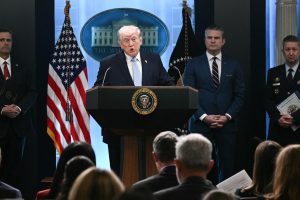
In the political sphere, US President Donald Trump stated he was “not thinking about extending the ceasefire with Iran,” suggesting a precarious outlook for any near-term de-escalation. The Pope’s recent honoring of an Algerian saint known for decrying wars offered a symbolic contrast to the ongoing violence.
As the situation develops, the damage to civilian infrastructure like schools, the expansion of the conflict into Lebanon, and the involvement of global powers like China and Russia indicate a conflict that is both deepening and broadening, with no clear resolution in sight.