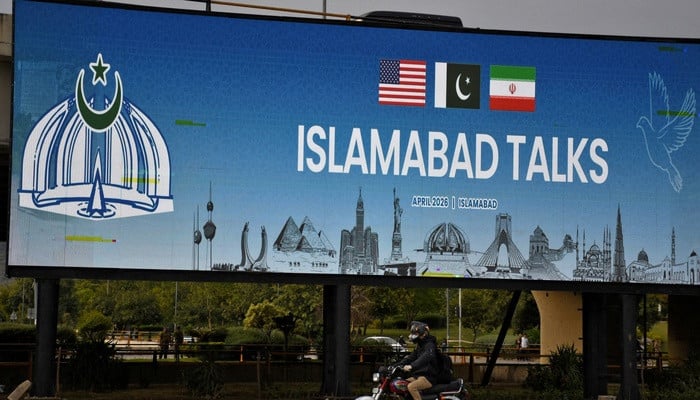
The recent high-level talks between the United States and Iran in Islamabad, while not yielding a formal agreement, represent a significant diplomatic achievement for host nation Pakistan. The mere fact that senior representatives from Washington and Tehran sat together for direct dialogue—the first such face-to-face engagement since the 1979 Iranian Revolution—marks a critical breakthrough in one of the world’s most entrenched adversarial relationships.
The First Step: Breaking Decades of Silence
In international diplomacy, especially where deep mistrust and ideological hostility define relations, the most formidable hurdle is often simply getting adversaries to communicate. For nearly five decades, formal diplomatic channels between the U.S. and Iran have been severed, with even indirect communication sporadic and fraught. Pakistan’s success in convening this meeting demonstrates a high degree of confidence from both parties in Islamabad’s neutrality and its ability to manage a sensitive, potentially volatile diplomatic environment.
Active Facilitation, Not Passive Hosting
Pakistan’s role extended beyond providing a neutral venue. The engagement in Islamabad was characterized by substantive, structured discussions, with Pakistani officials actively involved in sustaining momentum and managing the flow of communication. This transition from passive host to active facilitator is a crucial distinction in diplomacy, one that contributes directly to the dynamics of negotiation itself. Statements of appreciation from both sides toward Pakistan’s civilian and military leadership further reinforced Islamabad’s role as a credible intermediary capable of shaping conditions for dialogue.
Strategic Balancing in a Complex Region
Perhaps even more impressive was Pakistan’s ability to navigate its own complex web of foreign relationships during this process. Islamabad maintains strategic ties with China, deepening cooperation with Saudi Arabia, and necessary, albeit complex, engagements with both Iran and the United States. Successfully hosting such a dialogue without alienating any of these partners, who often have divergent regional priorities, required meticulous diplomatic calibration and showcased a level of strategic flexibility that is frequently underestimated.
The Stakes: Economic and Security Imperatives
For Pakistan, regional stability is not merely a diplomatic objective but an economic and security necessity. The country relies heavily on energy imports and financial support from Gulf partners like Saudi Arabia and Qatar. Any escalation between the U.S. and Iran, potentially drawing in regional powers, would have immediate, dire consequences for Pakistan’s economic outlook and could place Islamabad in an untenable strategic position, given its longstanding defense cooperation with Saudi Arabia.
Redefining Diplomatic Success
While an immediate, tangible agreement would have been the ideal outcome, interpreting the absence of one as a failure misunderstands the nature of diplomacy in deep-rooted conflicts. Initial engagements in such contexts are rarely about final settlements. Their value lies in reopening channels, clarifying positions, and establishing a baseline for future talks. By restoring direct communication after nearly 50 years, Pakistan has helped reduce the risk of miscalculation, lower the temperature of confrontation, and created a possibility—however tentative—for future progress.
Ultimately, the Islamabad talks have reinforced Pakistan’s standing as a credible diplomatic actor. In a global landscape often defined by fragmented alignments, Pakistan demonstrated an ability to manage multiple relationships, navigate intense geopolitical sensitivities, and facilitate dialogue where few others could. This achievement, subtle in appearance, may prove significant in its longer-term implications for regional stability and Pakistan’s own diplomatic influence.