Diplomatic Breakthroughs and Military Clashes Mark a Pivotal Day
The complex geopolitical landscape of the Middle East conflict witnessed significant developments on Thursday, April 16, 2026, with diplomatic maneuvers offering a glimmer of hope even as military confrontations intensified. A senior Iranian official indicated progress in talks with the United States, while fierce fighting erupted along the Israel-Lebanon border, damaging critical infrastructure.
Iran-US Talks Show Progress, Nuclear Issues Remain
A senior Iranian official stated that negotiations with the United States have yielded progress toward an agreement to end weeks of warfare. The official credited a visit by Pakistan’s Chief of Defence Forces, Field Marshal Asim Munir, to Tehran with helping to “reduce differences in some areas,” raising hopes for an extended ceasefire. However, the official cautioned that major splits remain, particularly concerning Tehran’s nuclear ambitions. The talks are occurring during a fragile two-week truce.
China Sees “Window” for Peace
Amid the diplomatic push, China stated that a “window for United States-Iran peace” is opening, adding an international dimension to the efforts to de-escalate the conflict.
Lebanon-Israel Border Erupts in Violence
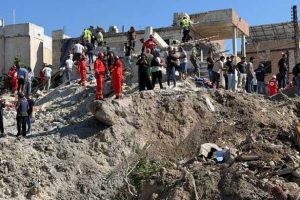
While diplomats talked, the Israel-Lebanon border saw a severe escalation. Heavy clashes broke out in the town of Bint Jbeil between Hezbollah fighters and Israeli troops. Israeli forces employed warplanes and helicopters, destroying several houses. In a separate incident, an Israeli airstrike on the town of Tebnine reportedly inflicted heavy damage on a local hospital, raising immediate humanitarian concerns.
WHO Chief Calls for Protection of Healthcare
In response to the violence, the Director-General of the World Health Organization issued a call to protect Lebanon’s healthcare system, highlighting the vulnerability of medical facilities in the conflict zone.
Confusion Over Netanyahu-Aoun Call
Diplomatic communications faced public confusion. A member of Israel’s security cabinet stated that Prime Minister Benjamin Netanyahu would speak with Lebanese President Joseph Aoun. However, a Lebanese official source told AFP that Lebanon was “not aware” of any upcoming contact with Israel, contradicting a prior social media post by former US President Donald Trump who claimed the call was scheduled.
Sanctioned Supertankers Defy US Blockade
In a bold challenge to US enforcement, a second US-sanctioned supertanker entered the Gulf via the Strait of Hormuz. Shipping data confirmed the entry of the Very Large Crude Carrier (VLCC) *RHN*, following another sanctioned tanker, the *Alicia*, a day earlier. This occurred despite a US Central Command blockade intended to prevent vessels from visiting Iranian ports. Iran’s Fars News Agency claimed one of its sanctioned tankers had crossed the strait.
Iran Shifts All Schools Online
On the domestic front, Iran’s Education Ministry announced that all schools nationwide will transition to virtual learning starting April 21. The move, reported by the Tasnim News Agency, will continue indefinitely, signaling preparations for prolonged regional instability.
TSMC Assesses War Impact
Beyond the immediate region, Taiwan’s semiconductor giant TSMC stated it does not expect the Middle East war to impact its supply of critical chipmaking materials like helium in the “near term.” The company cited multiple regional suppliers and safety stock inventories, aiming to reassure global technology markets.