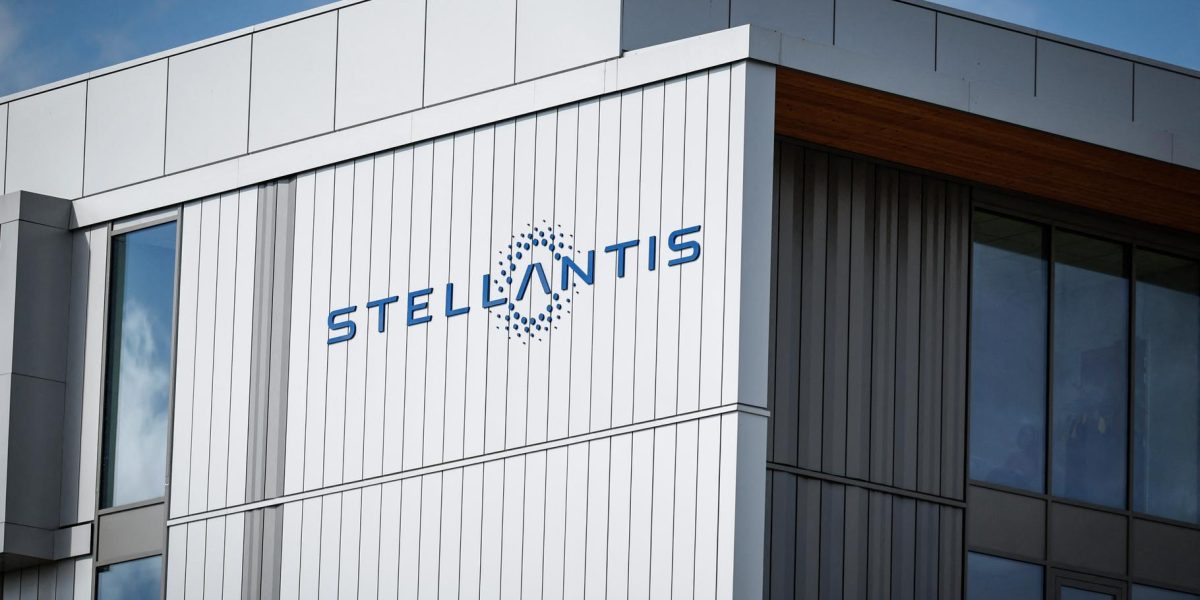
The automaker Stellantis will cease automobile production at its historic factory in Poissy, Yvelines, after 2028, the group announced. The site, the last vehicle assembly plant in the Paris region, will be converted into a center for parts manufacturing and vehicle deconstruction, preserving 1,000 out of 1,500 current production jobs.
A €100 Million Conversion and “Natural” Job Reductions
The Italian-French-American group—which includes brands like Peugeot, Citroën, Opel, Fiat, and Chrysler—plans to invest €100 million to reconfigure the site. Stellantis stated that workforce reductions would occur primarily through “natural or voluntary departures,” emphasizing that “the site will not close; it will have a sustainable industrial future.”
By 2030, the plant is slated to house four new industrial activities:
- Automotive parts production
- Parts revalorization in a circular economy model
- Vehicle preparation and transformation
- 3D printing of parts for small series
The company cited the aging European vehicle fleet—averaging 12 years across 40 million cars—as driving new demand for parts manufacturing.
Union Backlash and Strike Call
The announcement was met with immediate union condemnation. The Sud union at Stellantis Poissy denounced the plan as “a real bloodletting,” arguing that promised new activities would create only 200-300 jobs with no long-term guarantees. The union is calling for a strike on April 23, warning of broader impacts on equipment manufacturers and subcontractors.
Site director Éric Hann defended the decision as “the result of effective co-construction with responsible social partners who have always defended employment and the site’s sustainability.”
The End of an Era for Paris-Region Auto Manufacturing
The Poissy plant, established in 1938, currently produces about 400 Opel Mokka and DS3 vehicles daily. At its peak in 1976, it employed 27,000 people. Its closure continues a grim trend for major automotive plants in the Île-de-France region, following the shutdowns of Renault’s Boulogne-Billancourt plant (1992), PSA’s Aulnay-sous-Bois factory (2014), and Renault’s Flins plant, which ended car production in 2024 to focus on vehicle reconditioning.
The plant’s fate was sealed in October when Stellantis canceled the electric DS3 project without assigning a new model to Poissy. Internal reports from 2025 showed the plant operating at just 58% of its capacity.
Broader Industry Decline
This move reflects the continued contraction of France’s automotive employment over two decades, driven by offshoring, the transition to electric vehicles, and rising Chinese competition. The French and European new car markets have shrunk by approximately a quarter since the COVID-19 pandemic. According to INSEE, the French automotive sector has lost a third of its jobs in 20 years, declining from 425,500 in 2010 to 286,800 in 2023.