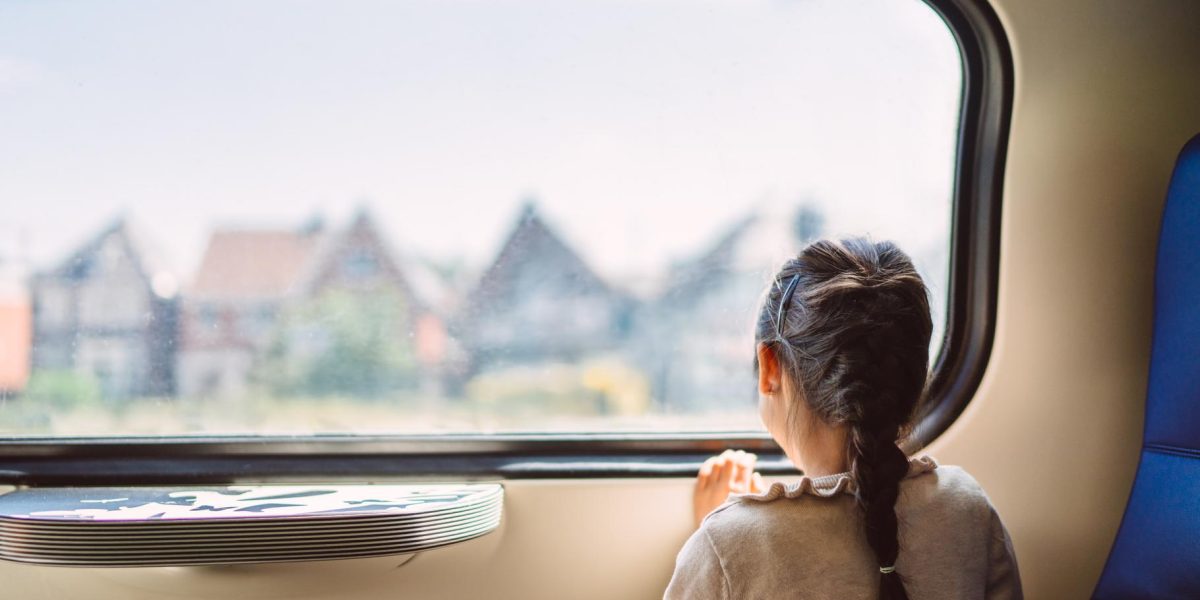
For advocates of slow travel, the train is the preferred mode of transport not just for convenience, but for the uniquely calm journey it offers. This time can transform a commute into the first act of a vacation, providing a rare opportunity to let the mind wander—a practice with profound, often overlooked benefits.
The Window as a Meditation Tool
Watching landscapes unfold from a train window is more than a chance to reflect on your week; it’s a genuine meditative moment. According to psychotherapist Sandrine Décembre, it is an “excellent solution to recharge and destress.”
“By looking out the train window, we return to the present moment. We settle, we observe a landscape—not through a screen, not by taking a photo. We keep it for ourselves, we inscribe it in our memory,” explains Décembre. This form of grounding is championed by mindfulness meditation practitioners to alleviate anxiety. To enhance the benefits, she recommends immersing yourself in the train’s environment: “Removing your headphones for a few minutes to fully embrace the moment fosters a sense of satisfaction. You’ve initiated the act of travel, you’ve set it in motion, and that creates a moment of relaxation.”
Passenger Experiences Confirm the Calm
This perspective is shared by travelers, as highlighted in a study by the applied social sciences bureau Mobil’homme. The research, titled “Observation of the landscape from the train: knowledge, practices and effects,” analyzed responses from passengers on Swiss train lines.
The findings revealed that “notions of well-being, relaxation, and rest emerge very regularly when discussing the effects of landscape observation. Some travelers directly associate therapeutic qualities with watching the landscape from the train, for example regarding stress or mood. For many passengers, the feeling of well-being seems to be provided by watching the scenery go by and freeing the mind.”
The Science of Looking Outward
The benefits extend beyond the rails. The simple act of looking out a window can boost well-being. In an article for Cerveau & Psycho, psychiatrist Christophe André, citing several researchers, argues: “To stress less, look at the horizon.” He suggests glancing out a window to observe the sky or distant landscapes, shifting focus away from the prolonged ocular fixation on phone or computer screens, which can subtly increase tension.
Nature’s Healing Power, Even in Images
Seeing nature itself has measurable effects on stress and anxiety. In an article for The Conversation, researcher Mar Estarellas from McGill University explains that an analysis of 108 peer-reviewed studies shows a consistent pattern: “When people spend time in natural environments, or even see images of nature, the brain tends to show signs of reduced stress, less mental effort, and better emotional regulation.”
Could the answer to the next stress peak be a journey on a local train? At the very least, the evidence suggests it certainly couldn’t hurt.