Iran has declared the vital Strait of Hormuz will remain closed to shipping until the United States lifts its naval blockade on Iranian ports, as a top official stated that negotiations with Washington, while showing progress, are still far from yielding a final peace agreement.
Negotiations Progressing but Gaps Remain
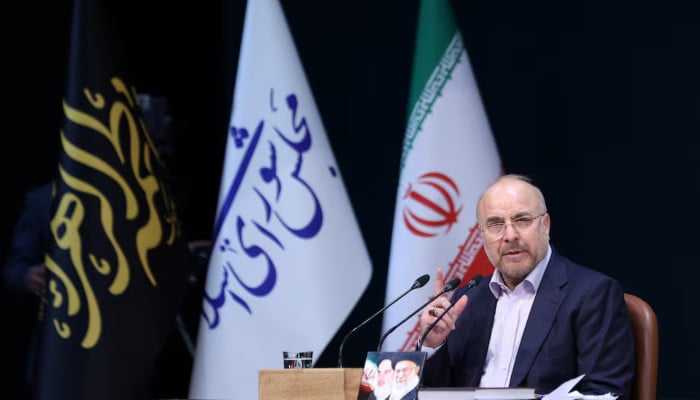
Mohammad Bagher Ghalibaf, the Speaker of Iran’s Parliament, delivered a televised address outlining the state of talks aimed at ending the regional conflict. “There has been progress in talks with Washington but there are many gaps and some fundamental points remain,” Ghalibaf stated. He emphasized, “We are still far from the final discussion.”
The remarks come as a two-week ceasefire is set to expire, with its renewal uncertain. The conflict began with a wave of US-Israeli attacks on Iran in late February, later spreading across the region.
Strait of Hormuz: A Critical Lever
The strategic waterway, which typically carries a fifth of the world’s oil and liquefied natural gas, became a central point of contention. Iran briefly reopened the strait following a ceasefire agreement involving its ally Hezbollah in Lebanon, causing a sharp drop in global oil prices.
However, Tehran reversed its decision after US President Donald Trump insisted the naval blockade would continue until a comprehensive deal is reached. “If America does not lift the blockade, traffic in the Strait of Hormuz will definitely be limited,” Ghalibaf warned.
Warnings and Incidents Escalate Tensions
Iran’s Revolutionary Guards issued a stark warning, stating that any vessel attempting to pass through the strait without permission “will be considered cooperation with the enemy, and the offending vessel will be targeted.”
Maritime reports indicated several concerning incidents during the brief reopening period:
- The Revolutionary Guards fired upon one tanker.
- The force threatened to destroy an empty cruise ship fleeing the Gulf.
- An unknown projectile hit a vessel, damaging shipping containers.
The Indian foreign ministry summoned Iran’s ambassador to protest a shooting incident involving two Indian-flagged ships.
Diplomatic Sticking Points and Regional Fallout
Key obstacles in the negotiations include Iran’s stockpile of near-weapons-grade enriched uranium and the future status of the Strait of Hormuz. President Trump claimed Iran had agreed to hand over its enriched uranium, a claim vehemently denied by Iran’s foreign ministry.
Meanwhile, regional diplomacy continues. Egypt’s Foreign Minister, Badr Abdelatty, expressed optimism alongside Pakistan, hoping to secure a final agreement “in the coming days.”
The conflict’s regional impact was further underscored by an ambush on UN peacekeepers in Lebanon that killed a French soldier. UN Secretary-General Antonio Guterres condemned the attack, with an initial assessment blaming Hezbollah, which denied involvement.