Negotiations Proceed Under Shadow of Threats and Ceasefire Violations
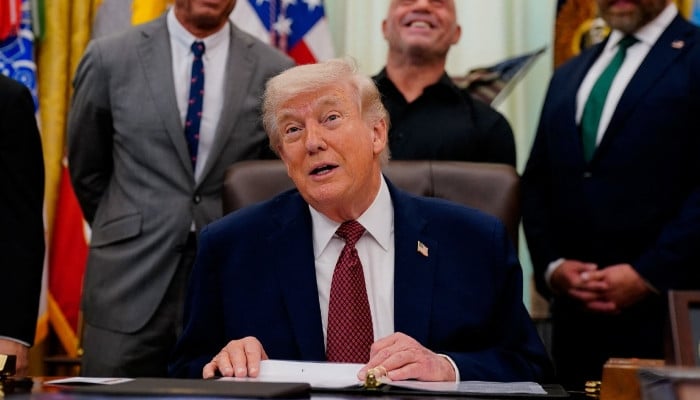
US negotiators are set to arrive in Islamabad on Monday evening for a second round of critical talks with Iran, confirmed President Donald Trump in a social media post. The announcement comes alongside a severe warning from the US President, who accused Iran of a “total violation” of a ceasefire and threatened to destroy the nation’s critical infrastructure if it rejects Washington’s terms.
Trump’s Ultimatum: “No More Mr. Nice Guy”
In a post on Truth Social, President Trump stated, “My Representatives are going to Islamabad, Pakistan — They will be there tomorrow [Monday] evening, for Negotiations.” He framed the US position as offering a “very fair and reasonable DEAL” but followed with a stark ultimatum.
“If they don’t, the United States is going to knock out every single Power Plant, and every single Bridge, in Iran,” Trump warned, adding, “NO MORE MR. NICE GUY!” The threat was linked to accusations that Iran fired on ships near the Strait of Hormuz on Saturday, which Trump labeled a breach of the ceasefire agreement.
Delegation Composition and Regional Tensions
Uncertainty surrounds the exact composition of the US delegation. Conflicting reports suggest the team could include Trump’s son-in-law Jared Kushner and Special Envoy Steve Witkoff, or be led by Vice President JD Vance, who headed the previous round of talks in Islamabad.
The talks are occurring against a volatile backdrop. The Middle East conflict, which began with joint US-Israel strikes on February 28, escalated as Iran blocked the Strait of Hormuz. A temporary ceasefire and the first round of Islamabad talks, facilitated by Pakistani Prime Minister Shehbaz Sharif, offered a brief respite. However, the strait’s status remains in flux, with Iran reopening and then re-closing it citing a US naval blockade.
Security Tightened in Pakistani Capital
Pakistan has heightened security in preparation for the talks. Authorities have sealed off Islamabad’s high-security Red Zone to all traffic, and US advance teams have already arrived in the country. The talks represent a continuation of Pakistan’s diplomatic efforts to mediate, which included a recent visit to Tehran by Chief of Army Staff Field Marshal Asim Munir.
Long Road Ahead Despite “Progress”
While Iranian Parliament Speaker Mohammad Bagher Ghalibaf acknowledged “progress” in the discussions with Washington, he tempered expectations. “We are still far from the final discussion,” Ghalibaf said in a televised address, noting that “many gaps and some fundamental points remain.” The outcome of this week’s negotiations in Islamabad will be crucial in determining whether the region moves toward a permanent peace or a renewed escalation of hostilities.