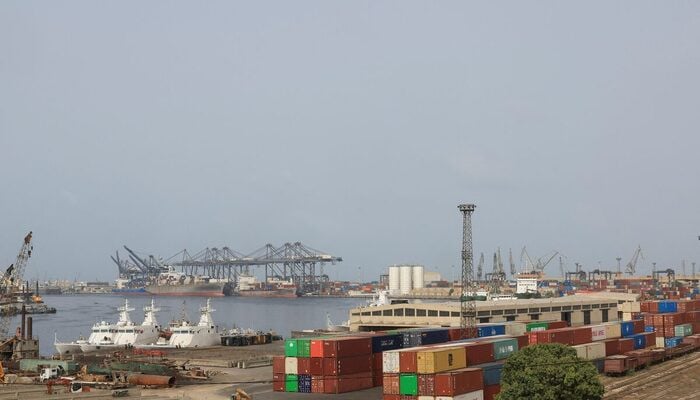
Pakistan has officially established a new regulatory framework allowing the transit of goods from third countries to Iran through its territory, designating six specific trade corridors under the recently notified Transit of Goods through Territory of Pakistan Order 2026.
The Ministry of Commerce issued the notification, which aims to facilitate bilateral and regional trade by permitting the movement of cargo destined for Iran through Pakistani territory under a structured transit arrangement. The order was published in pursuance of Article 2 of the 2008 Agreement between Pakistan and Iran on International Transport of Passengers and Goods by Road.
Six Designated Transit Corridors
Under the new framework, the following routes have been formally designated for the transit of goods to Iran:
- Gwadar–Gabd
- Karachi/Port Qasim–Lyari–Ormara–Pasni–Gabd
- Karachi/Port Qasim–Khuzdar–Dalbandin–Taftan
- Gwadar–Turbat–Hoshab–Panjgur–Nag–Besima–Khuzdar–Quetta/Lakpass–Dalbandin–Nokundi–Taftan
- Gwadar–Lyari–Khdar–Quetta/Lakpass–Dalbandin–Nokundi–Taftan
- Karachi/Port Qasim–Gwadar–Gabd
These corridors connect major Pakistani ports, including Karachi, Port Qasim, and Gwadar, with border points such as Gabd and Taftan, providing multiple access points for goods entering Iran.
Regulatory Framework and Customs Procedures
The order applies to the transportation of transit goods in transport units consigned from a third country and destined for Iran via Pakistan. It defines key terms, including “transit” as the movement of goods across Pakistan when the passage is only a portion of a complete journey beginning and ending beyond Pakistan’s borders.
Cargo movement under the notification will be regulated in accordance with procedures prescribed by the Federal Board of Revenue (FBR) and the provisions of the Customs Act, 1969. Traders must provide a “Customs Security,” an encashable financial guarantee equivalent to Pakistan’s import levies, submitted through traders or authorized brokers.
The order also permits “cross stuffing,” defined as the transfer of goods from one container to another container or any other mode of transportation, subject to relevant customs laws and regulations.
Scope and Legal Basis
Issued under the powers conferred by the Imports and Exports (Control) Act, 1950, the order takes effect immediately nationwide. It formalizes the mechanism for transit trade that had been anticipated under the 2008 bilateral agreement, opening new trade corridors with Iran and potentially enhancing regional connectivity.