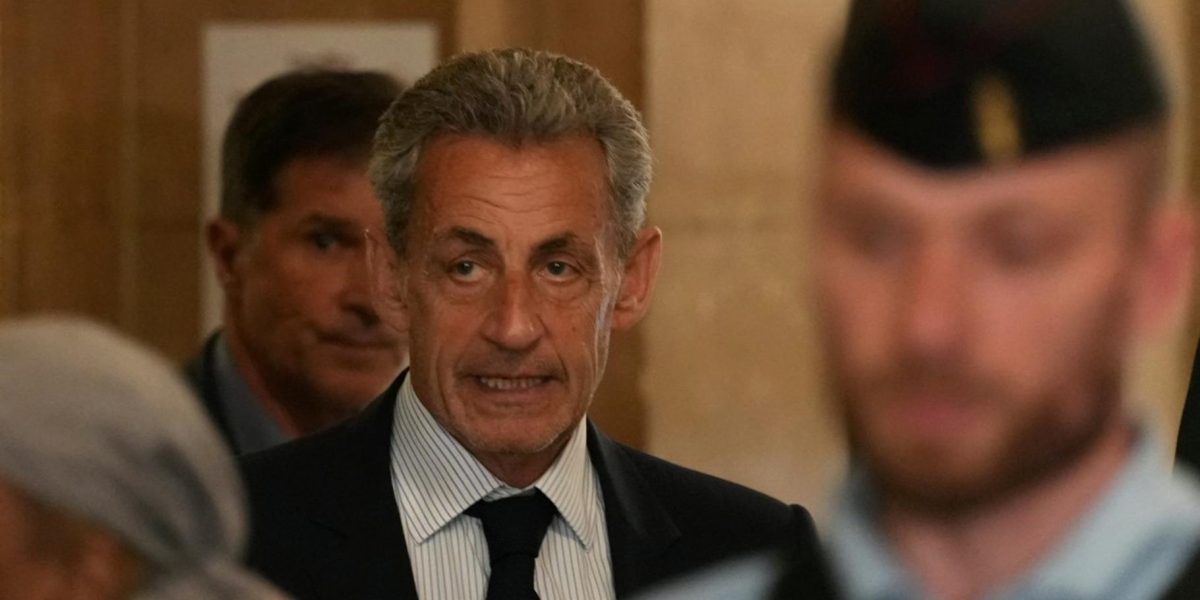
Nicolas Sarkozy is navigating a delicate balancing act. Returning to the witness stand on Wednesday, April 29, for the appeal trial concerning the alleged Libyan financing of his 2007 presidential campaign, the former French president faced damaging written statements from his former top aide, Claude Guéant. While Sarkozy contradicted Guéant’s account, he notably refrained from directly attacking his ex-right-hand man, signaling a shift in legal strategy.
Guéant’s Accusations Take Center Stage
At the outset of the hearing, the presiding judge of the Court of Appeal read aloud two written attestations from Claude Guéant, dated April 14 and 21. These letters were a response to Sarkozy’s attempts to deflect responsibility for communications with the Gaddafi regime onto his former secretary general at the Élysée Palace. “Outraged,” Guéant provided a damning version of events.
The most significant testimony involves a 2007 dinner between then-newly elected President Sarkozy and Libyan leader Muammar Gaddafi. According to Guéant, after the meal, Sarkozy allegedly told him, “Claude, see to this,” referring to the case of Abdallah Senoussi, Gaddafi’s brother-in-law. This point is central to the prosecution’s case, which suspects a “corruption pact” between Sarkozy’s camp and Libyan authorities—exchanging campaign funding for favors, including addressing Senoussi’s legal status. Senoussi was sentenced to life in prison in France for the 1989 bombing of UTA Flight 772.
Sarkozy Denies Key Allegations
At the bar, Sarkozy formally denied Guéant’s account. “The only time Mr. Gaddafi spoke to me about [Abdallah Senoussi] was in 2005,” during a visit as interior minister, he stated. The former president had previously claimed he rejected the request outright at that time. However, he refrained from launching a frontal attack on Guéant.
Sarkozy highlighted what he called Guéant’s “three versions” of the Senoussi episode. “In 2018, he said Bechir Saleh spoke to him about it. A second time, he said it might have been Gaddafi. A third time, he said it was me who told him, ‘See to this, Claude,’” Sarkozy noted. Yet, he stopped short of accusing Guéant of lying. “I am not saying Mr. Guéant is lying,” Sarkozy said, “but his memory has evolved.”
Concessions and Strategic Shift
In a notable concession, Sarkozy acknowledged he was mistaken in earlier claims of being unaware of four trips Guéant made to Libya between 2008 and 2010. “These trips did exist,” Sarkozy admitted, adding they were official and reported in the press. He argued their significance was limited, as Libya had fallen “to the bottom of the pile in French international relations” at the time, explaining why they slipped his mind.
When questioned about a safe deposit box used by Guéant near the Opéra in Paris, Sarkozy was equally cautious. Asked whether it might have stored cash from Interior Ministry funds, Sarkozy replied, “I don’t believe it, I can’t imagine it, and I don’t think so. Claude Guéant has the right to the presumption of innocence.”
Motives Behind the New Approach
This careful treatment of Guéant marks a departure from Sarkozy’s earlier offensive stance at the start of the appeal trial. Observers speculate the shift may stem from a fear of losing credibility with the court, which is well aware of the long professional relationship between the two men. Alternatively, it could reflect concern over another devastating rebuttal from Guéant.
When asked by the civil parties’ lawyer, Maître Vincent Brengarth, “Do you think Mr. Guéant still has things to say to this court?” Sarkozy responded, “You’ll have to ask Mr. Guéant that.”