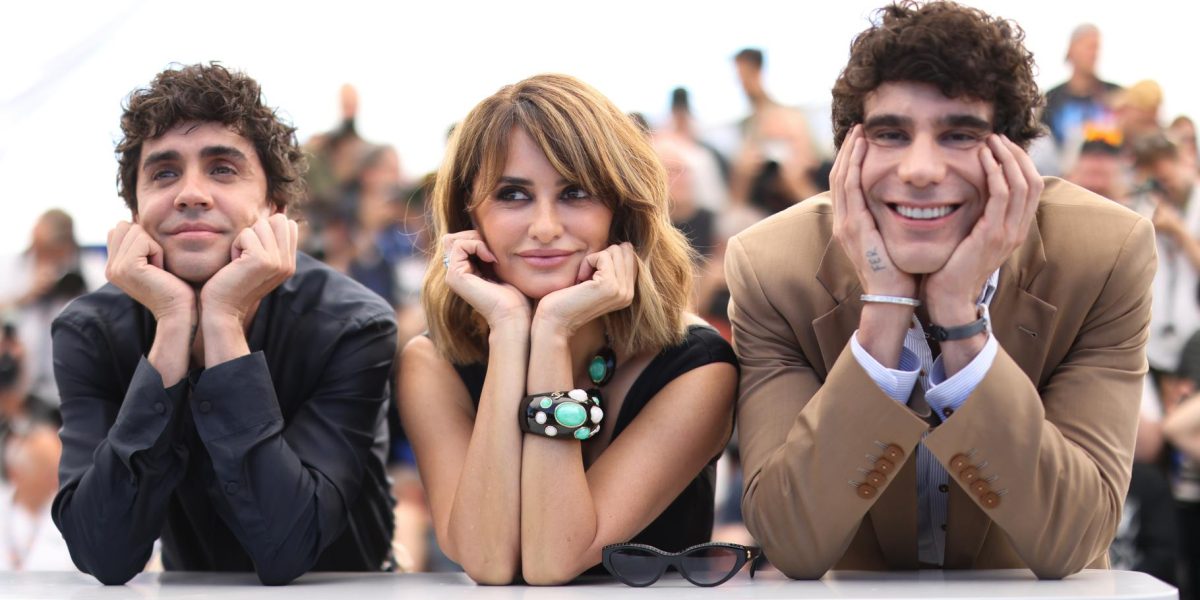
The final applause had barely faded in the Grand Théâtre Lumière, but the verdict was already spreading like wildfire across the Croisette. La Bola negra, the Spanish drama from directors Javier Ambrossi and Javier Calvo starring Penélope Cruz, had just secured the longest standing ovation of the 2026 Cannes Film Festival. Depending on which trade publication you trust, the stopwatches clocked between 16 and 20 minutes of continuous clapping.
It is a staggering number that instantly crowns the film as a statistical frontrunner, surpassing the 12 minutes given to Cristian Mungiu’s Fjord and the 11 minutes for Ryusuke Hamaguchi’s Soudain. Yet, as the applause record is gleefully reported, a palpable sense of discomfort is growing among the very artists being celebrated. The ritual of the Cannes standing ovation, once a spontaneous gesture of admiration, has warped into a high-stakes, click-driven metric that often leaves filmmakers squirming under the spotlight.
A Ritual of Awkwardness
The phenomenon has become a distinct piece of Cannes theatre. As the credits roll, journalists whip out their smartphones not to capture the emotion, but to start a timer. The result is a media frenzy over a number that critics argue is a deeply unreliable indicator of a film’s Palme d’Or chances. An article in The Wrap recently dissected this “clickbait for cinephiles,” highlighting how the stopwatch rally can feel like a clinical dissection rather than a warm embrace.
The discomfort is not merely theoretical; it is visible on screen. During the ovation for his own film El Ser Querido earlier in the festival, Spanish director Rodrigo Sorogoyen was visibly moved but ultimately seemed overwhelmed, gesturing for the camera filming his prolonged reaction to move away. Last year, Oscar-winning director Joachim Trier confessed to the HuffPost that his 19-minute ovation for Valeur Sentimentale
Trier’s sentiment is echoed by a chorus of industry veterans. Actress Renate Reinsve, who endured a marathon ovation for Valeur Sentimentale and is back this year with Fjord, admitted the experience becomes a surreal test of endurance. “You don’t know what to do when your smile starts to tremble,” she noted. Director Terry Gilliam, reflecting on his 15-minute ordeal for The Man Who Killed Don Quixote, was characteristically blunt with The Wrap: “I had to stand there, smile, wave, then turn to the actors… I made a fool of myself. It was absurd.”
The Unreliable Predictor
If the goal of timing these ovations is to predict the Palme d’Or, the data is notoriously flawed. The most glaring recent example is Trier’s Valeur Sentimentale. In 2025, its thunderous 19-minute reception dwarfed the mere “nearly 8 minutes” reported by Variety for Jafar Panahi’s Un simple accident. When the jury presented its awards, however, it was Panahi who walked away with the Palme d’Or, while Trier had to settle for the Grand Prix.
History is littered with similar contradictions. Michael Moore’s Fahrenheit9/11 holds a legendary 20-minute record and won the Palme in 2004. Yet the all-time record holder, Guillermo del Toro’s Pan’s Labyrinth, which clocked a still-unbeaten 22 minutes in 2006, left the festival without the top prize. The duration of an ovation, influenced by the mood in the room and the varying start-times set by different journalists’ stopwatches, remains an inexact science at best.
For La Bola negra, a sweeping drama tracing the intertwined destinies of three gay men across distinct eras of Spanish history, the lengthy applause positions it as a serious contender for the jury’s favor. But as the festival prepares to announce its winners on May 23, the only certainty is that the decision rests solely with the jury, not the stopwatch. The applause may be long, but the memory of that awkwardness on a filmmaker’s face might last even longer.