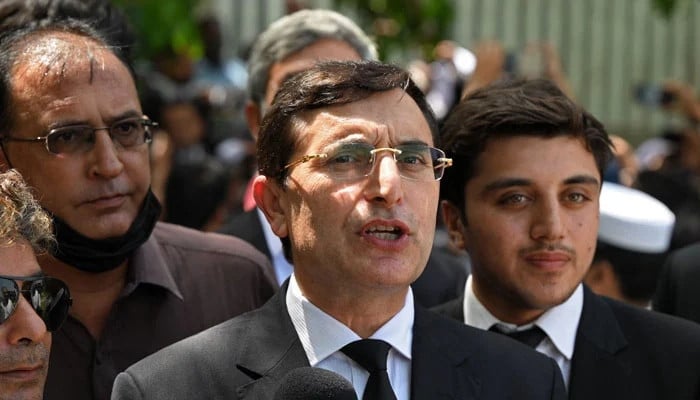
PESHAWAR: The Khyber Pakhtunkhwa government is set to unveil its fiscal year 2026-27 budget today, with Pakistan Tehreek-e-Insaf (PTI) Chairman Barrister Gohar Ali Khan asserting that the financial plan is being passed as a constitutional obligation, not at the request of the government. The statement comes amid swirling uncertainty and reports of a possible delay driven by internal party discussions.
Speaking to the media on Friday, Gohar dismissed any notion that the provincial budget was linked to the centre’s directives. “Passing the budget is a provincial matter itself and has no connection with the federal government,” he said, emphasizing that all lawmakers, including Ali Amin Gandapur, would attend the assembly session to fulfill their legal responsibility.
Internal Debate and a Shift in Strategy
The path to today’s scheduled 2pm presentation has been marked by intense deliberation within the PTI. Senior party leader Shaukat Yousafzai revealed that Chief Minister Sohail Afridi had initially preferred to postpone the budget until a meeting with the party’s founder could be arranged. Alternative strategies were also considered.
“One proposal was to present a three-month budget if legal complications became unavoidable,” Yousafzai explained. “However, legal experts advised that such a move would halt development work across the province and would only cover matters such as salaries and pensions.” Faced with this prospect, the party ultimately recommended presenting the full budget to prevent damage to the province and ensure the continuity of development projects.
Yousafzai confirmed the decision was made in the broader public interest. Addressing reports of internal friction, he stated that members with reservations were not rebelling. “All lawmakers will attend the assembly session, express their concerns in speeches, and ultimately vote in favour of the party’s position,” he said, denying any back-channel contacts were taking place.
A Tax-Free, Development-Focused Budget
Provincial government sources estimate the proposed budget at more than Rs2.170 trillion. The financial blueprint includes a robust development programme worth over Rs519 billion, with Rs150 billion from international donor agencies specifically earmarked for projects. The budget also proposes Rs55 billion for local governments and a 7% increase in salaries and pensions for government employees, alongside the merger of the 2022 and 2025 ad hoc relief allowances.
Yousafzai later provided a slightly higher estimate, pegging the overall budget size at around Rs2.2 trillion and proposing Rs235 billion for development works. He stressed that no new taxes were being imposed. “Several taxes are instead being reduced to ease the burden on the public, describing the budget as tax-free,” he said. The province expects to receive Rs1.443 trillion from the federal government and around Rs105 billion in net hydel profit, while its own revenue is estimated at Rs180 billion. More than 900 new development schemes have been proposed.
The budget is designed to be realistic and-based, with an expected shortfall of around Rs50 billion. Spending will be aligned with funds actually received from the federal government. Yousafzai highlighted education and health as key priorities, while, mines and minerals, water resources, and electricity generation identified as sectors offering a path to greater self-reliance for the province.Criticism and Unresolved Tensions
The budget announcement was not without criticism. Former provincial assembly speaker and PTI MPA Mushtaq Ghani told Geo News that a meeting of 35 like-minded lawmakers would be held at 2pm to determine their final strategy. He noted the chief minister’s earlier stance that the budget would not be presented before a meeting with the party founder, questioning how presenting the budget would now put pressure on the federal government to secure such meetings.
Yousafzai also criticized federal government for a lack of cooperation, claiming work on National Highway Authority roads was progressing and urging Islamabad to support the province’s development efforts. He alleged that the provincial government was not including grant-in-aid payments in the budget as a form of protest, accusing the federal government of withholding the province’s due financial share.