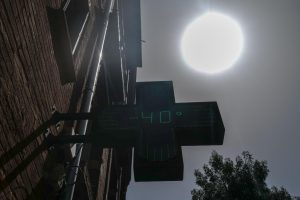
The fault is half-admitted. As the year’s second major heatwave engulfs France, shattering temperature records and disrupting daily life, climate issues are once again igniting public debate. Accused of being woefully unprepared during the previous heat spike in late May, the government is now scrambling to show it is tackling the crisis. Ministers are multiplying public statements, while the most vocal opposition parties compete with a flurry of propositions.
One harsh reality seems to be dawning on everyone: France is dangerously ill-prepared for these intense and prolonged heatwaves, phenomena that are destined to become increasingly frequent. Even among the President’s staunchest supporters and key architects of his two terms in office, a moment of self-reckoning appears to be underway. It is a rare exercise within Macron’s political sphere, yet one that struggles to translate into binding commitments.
Acknowledging the “Stop-and-Go” Policy Failures
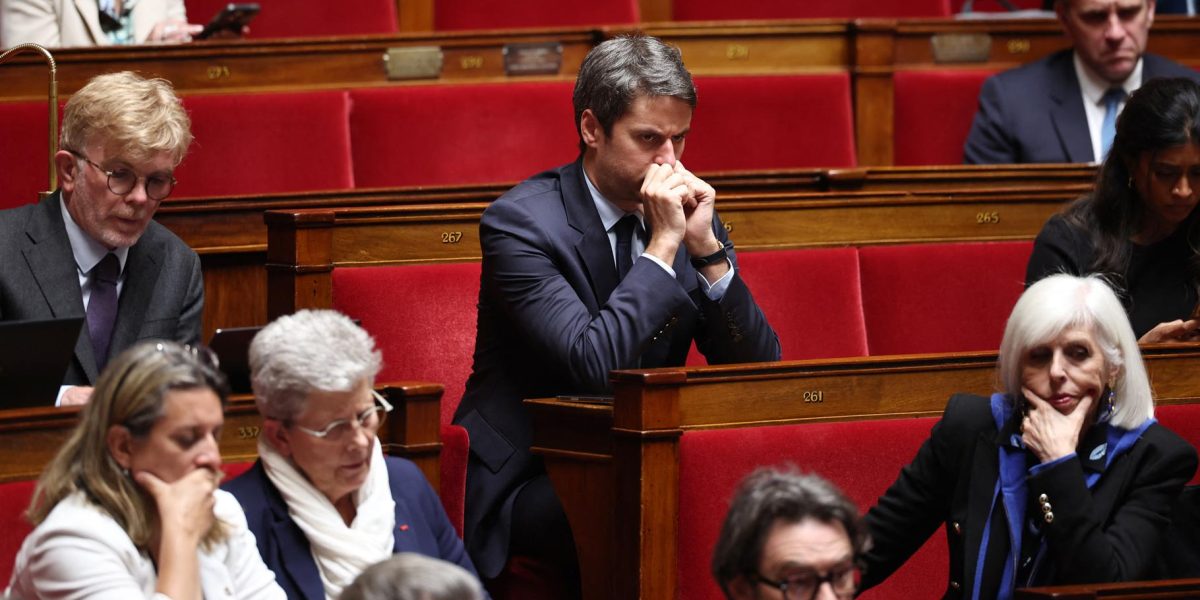
“Things have been done to reduce emissions in industry and mobility. But on the question of adaptation, we haven’t gone far enough fast enough,” admitted Gabriel Attal, the former Prime Minister, this week on franceinfo. The confession is significant, coming from the national secretary of the presidential Renaissance party, a man who stood at the core of government machinery for seven years, from 2018 to 2024.
He is not alone in this assessment. Following his lead, former Ecological Transition Minister Agnès Pannier-Runacher also pointed to critical delays in climate policy adaptation. “We are in a race against the clock, and if one could criticize the action of recent years, it is the stop-and-go approach,” she stated on Friday, urging the executive branch to halt “the backtracking” because “we are paying for all these delays today.”
While the Pas-de-Calais MP primarily blames right-wing opposition and successive governments since the National Assembly’s dissolution for the “slowdown in climate action,” it is clear the central bloc is not beyond reproach. Without disavowing the president’s “massive ambitions” at the start of his tenure, an advisor who worked alongside several Macronist ministers regrets that ecology remained “the adjustment variable” for different governments. In times of crisis or when seeking budget cuts, “the first reflex is to touch the Ecological Transition, and more specifically, support policies. That hasn’t changed,” the advisor noted, pointing to repeated cuts to the well-known “MaPrimeRénov’” home renovation scheme, weakened long before the 2024 political shake-up.
The Costly Reality of Adaptation
Today, the government’s response is “not up to the scale of what we must do,” the current Ecological Transition Minister admitted before the Senate. “We are going to have to increase resources” dedicated to adaptation, she declared, without offering further details. It is difficult to contradict the chorus of officials sounding the alarm.
Since Wednesday, the exceptional temperatures crushing most of the country have organizational chaos in hospitals, forced to resort to makeshift solutions, and in schools. Baccalaureate exams have been postponed, and 800 schools have had to adjust their hours. These disruptions starkly illustrate the pains of adaptation at a time when only 17,000 educational establishments are undergoing thermal renovation. To adapt them all would require an investment of 40 billion euros.
This is the crucial question. While the national climate change adaptation plan, tabled in 2023, was generally praised by professionals, large-scale strategies in this area often prove extremely costly for public finances. Perhaps too costly, given the budgetary trajectory set by the current Prime Minister, Sébastien Lecornu, who is seeking new savings to avoid a further deficit slippage.
Diverging somewhat from the self-critical stance adopted by some of his colleagues, particularly Gabriel Attal, the head of government decided on a new cut to the Green Fund a few weeks ago. Intended to help local authorities renovate buildings, this pot of money has been slashed by another 350 million euros. It has shrunk from 2.4 billion euros in 2023 to just 837 million planned for 2026. A fault half-admitted, but far from being forgiven.