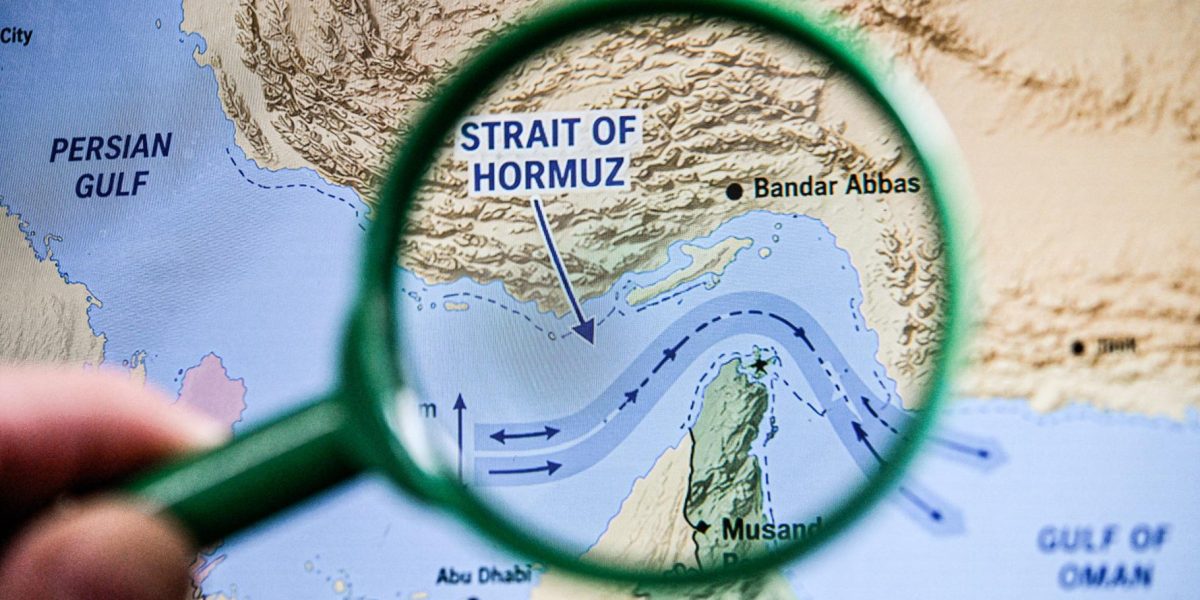
A tense and seemingly interminable standoff in the Strait of Hormuz entered a new phase late Sunday as the United States and Iran again announced a cessation of hostilities, allowing navigation to resume in the world’s most critical oil chokepoint. The fragile pause, reported by Axios, is designed to pave the way for technical discussions in Qatar on Tuesday, aimed at resolving grievances that have repeatedly threatened to reignite open conflict.
“It is expected that technical discussions will continue on all points of the memorandum of understanding. Both sides will stop (their attacks) for the time being and vessels can move freely,” a U.S. official explained in an email to AFP. The statement came after days of mutual accusations of ceasefire violations, a volatile back-and-forth that has plagued the region since the two adversaries signed their initial protocol on June 17. The U.S. official did not, however, confirm the specific details of the reported meeting in Qatar.
A Narrow Corridor and a Warning from Tehran
The strait, blockaded by the Islamic Republic during the war launched by Israel and the United States on February 28, had only just reopened the previous week. The prolonged closure destabilized global hydrocarbon trade and sent oil prices soaring. Even now, the freedom of navigation is severely restricted. Tehran is authorizing only a single transit corridor along its coast and has threatened any vessel that deviates from it.
Iranian Foreign Minister Abbas Araghchi reinforced this uncompromising stance on Sunday. “No other institution or country” besides Iran is “responsible” for managing the strait, he declared. “Any interference” in its management will lead “to delays in (its) reopening and will increase tensions,” he warned. This statement was a direct rebuke to Oman’s announcement of a temporary alternative shipping lane, presented as a UN-coordinated initiative to evacuate stranded sailors and ships, which dozens of vessels used this week.
A Week of Tit-for-Tat Fire
The path to the latest truce was marked by dangerous escalations. Since Thursday, two vessels were struck by projectiles of unknown origin—attacks the U.S. military attributed to Tehran, prompting two consecutive days of retaliatory bombing on Iran. Tehran responded in kind, launching missiles and drones toward its Gulf neighbors, notably Kuwait and Bahrain.
While the U.S. and Iran trade accusations, the legal framework governing the strait remains a point of contention. Although both Iran and Oman claim sovereignty over Hormuz, the 1982 United Nations Convention on the Law of the Sea (UNCLOS)—which Tehran has not ratified—guantees a right of “transit passage” through straits used for international navigation. The convention stipulates that “all ships and aircraft” engaged in “continuous and expeditious” transit enjoy unimpeded freedom of navigation.
Israeli Strikes Continue in Lebanon
The diplomatic maneuvering over Hormuz is unfolding against a backdrop of persistent violence in Lebanon, a theater Iran insisted on including in its protocol agreement with the U.S. Despite the signing of a framework agreement in Washington on Friday aimed at a “lasting peace,” Israel continued its strikes on Sunday. In a joint statement, Prime Minister Benjamin Netanyahu and Defense Minister Israel Katz announced the military had destroyed a long, deep Hezbollah tunnel in southern Lebanon.
The official Lebanese National News Agency reported shelling, with the health ministry citing two injuries after “the Israeli enemy” launched a grenade at a southern town. Nabih Berri, the speaker of Lebanon’s parliament and a Hezbollah ally, stated Sunday that the accord with Israel “will not be adopted” in its current form. The Shia movement, which also rejects the deal, reserved its right to “defend its homeland” following the latest Israeli attacks. The agreement conditions Israel’s withdrawal from a sector in southern Lebanon on Hezbollah’s disarmament, a long-standing demand that Beirut has struggled to implement. Lebanon was dragged into the conflict in early March when Hezbollah targeted Israel in support of its Iranian patron following the US-Israeli offensive on Tehran.