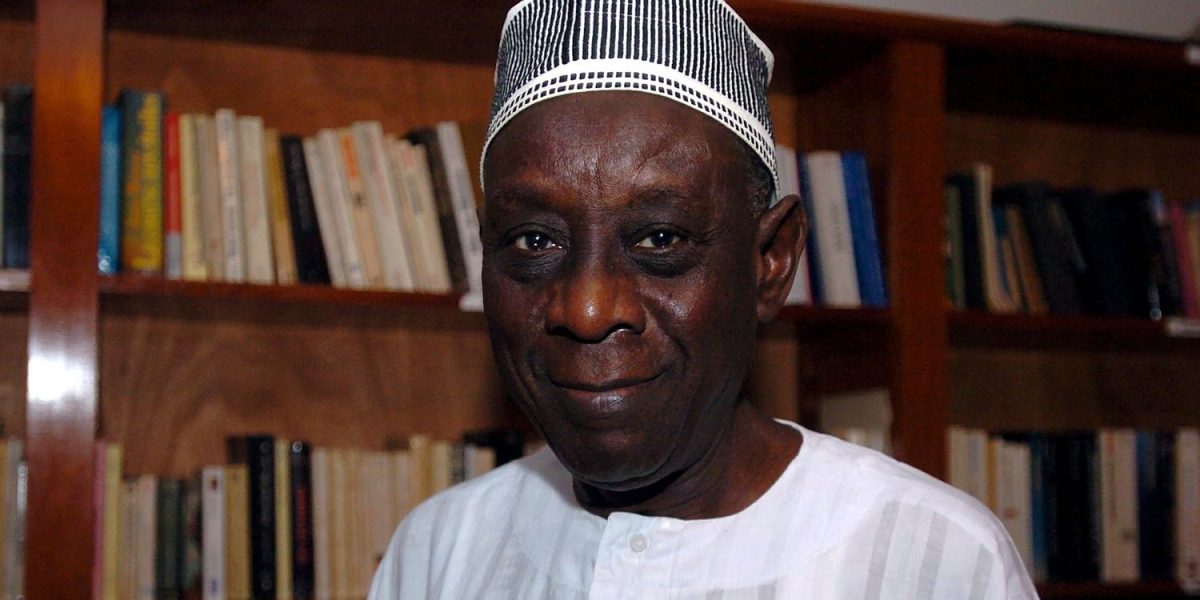
Cheikh Hamidou Kane, the Senegalese writer and statesman whose 1961 novel “L’Aventure ambiguë” (“Ambiguous Adventure”) became a cornerstone of francophone African literature, died Saturday evening in Dakar. He was 98.
The death was announced by Senegalese press and confirmed by President Bassirou Diomaye Faye, who paid tribute to the author on Facebook.
“I learned with deep sadness of the passing of Cheikh Hamidou Kane,” Faye wrote. “With ‘L’Aventure ambiguë,’ he gave generations of Africans the words to think through a question that still lives within us: how to open ourselves to the world’s knowledge without losing anything of who we are. As a minister of the Republic, he also served Senegal with dedication.”
A Life Between Two Worlds
Born on April 2, 1928, in Matam, in northeastern Senegal, Kane was raised between Quranic instruction and French schooling — a dual formation, both Islamic and Western, that would profoundly shape his writing.
He studied law and philosophy in Paris before embarking on a career as a senior civil servant, holding government posts in Senegal after independence. He also worked for UNICEF.
His semi-autobiographical novel, published in 1961, follows Samba Diallo, a young Muslim Fulani boy raised in the Quranic tradition and sent to French school before continuing his studies in Paris. The protagonist finds himself torn between his native culture and faith on one side, and Western thought on the other — a narrative drawn largely from Kane’s own experience.
A Classic Studied Across Africa
Translated into some 40 languages, “L’Aventure ambiguë” earned Kane the Grand Prix Littéraire d’Afrique Noire in 1962. It has been taught for decades in high schools, colleges and universities across the African continent and is regarded as a classic of francophone African literature.
“His work now belongs to the heritage of our nation and of all Africa,” President Faye said.
Cheikh Anta Diop University in Dakar also paid homage, writing on Facebook that “through his work, his thought and his commitment, Cheikh Hamidou Kane leaves a major intellectual and cultural legacy that will continue to nourish the reflection of generations of readers, students and researchers.”
A Dual Career in Letters and Public Service
Alongside his literary career, Kane held several high public offices, including governor of Thiès in western Senegal and, in the 1980s, minister of planning and cooperation.
He is survived by a body of work that continues to frame debates on identity, education and cultural encounter in postcolonial Africa.