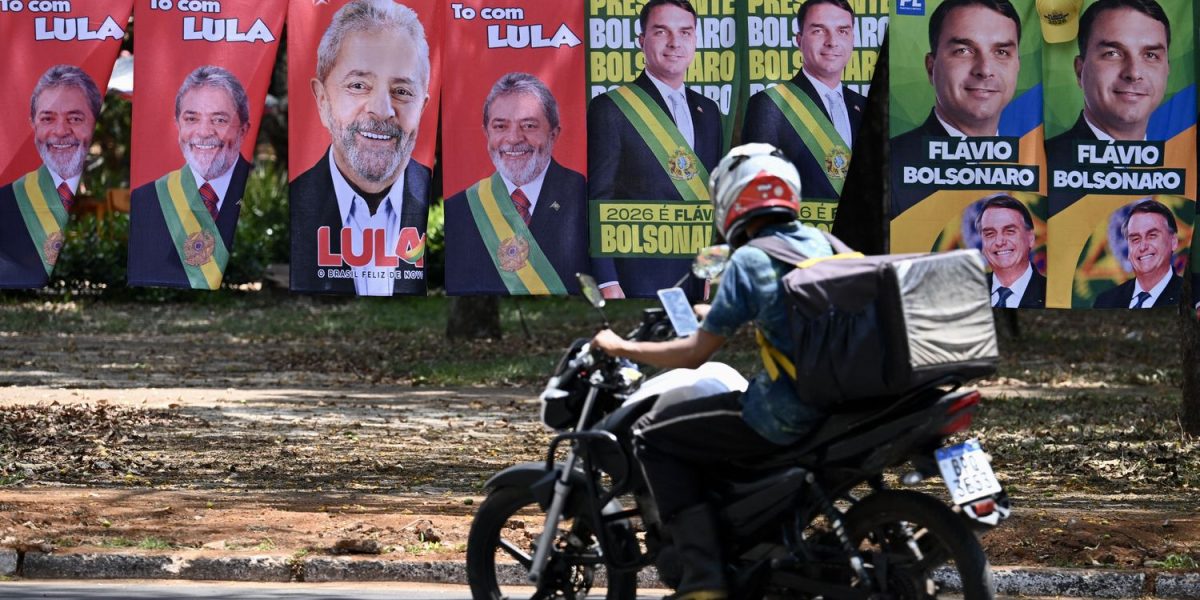
Brazilians head to the polls this Sunday for one of the most consequential presidential elections in the country’s history. On one side, Lula da Silva seeks an unprecedented fourth term. On the other, Flávio Bolsonaro, son of incarcerated former president Jair Bolsonaro, has leveraged his family name to become the incumbent’s fiercest challenger. Supporters of both camps believe victory is within reach, yet few can conceal their deep apprehension.
A Climate of Anxiety in Rio de Janeiro
“Nobody sleeps anymore! We’re anxious, incredibly anxious!” On a square in Rio de Janeiro where Lula is preparing to launch a festive march, Breno jokes with his friend, but his laughter belies genuine fear. He believes in victory, yet dreads the consequences of a Bolsonaro return to power.
“It would mean the liberation of Jair Bolsonaro,” he says. “The return of the Bolsonaros is a risk to democracy, with a strong chance of seeing the rights of those who need them most being stripped away.”
Rodrigo, another Lula supporter, fears for Brazil’s sovereignty. “If Flávio Bolsonaro’s group returns to power, the fear is that we become a backyard of the United States. We can see how the far right is growing in Brazil and across the world. This election is crucial. We must be the last light of South America,” he explains.
Scandals That Fail to Dent Popularity
Corruption scandals, alleged orgies with prostitutes, ties to criminal organizations: none of it appears to compromise the popularity of the elder Bolsonaro son, sighs Anielle Franco, former minister in Lula’s government.
“Elections are always difficult, but it’s true that fake news dominates far too often here,” she says. “But I believe we are well positioned to win.”
“In God’s Name, We Will Win”
Across town and on the other side of the political spectrum, Rosalia would not have missed Flávio Bolsonaro’s final campaign event for anything: a motorcycle parade through the city’s western zone.
She believes wholeheartedly. She cannot, in any case, imagine four more years under Lula. “In God’s name, we will win, just like in other Latin American countries,” she says. “Lula has already served three terms. Why does he want a fourth? Only dictatorships perpetuate themselves like that.”
For Fabio, electing the son is necessary to continue the father’s work. “Jair trusted his eldest son, so we trust him. If he had told us to vote for a dog, we would have done it. But we cannot remain with the other bandit, that thief. Otherwise, it’s the end of the line for Brazil and Brazilians.”
Fear as a Deciding Factor
In this deeply uncertain election, fear may ultimately decide votes more than genuine allegiance. With no strong third candidate emerging, both Lula and Flávio Bolsonaro have a narrow chance of winning outright in the first round.
The stakes could not be higher. For supporters on both sides, this is not merely an election. It is a battle for the soul of Brazil.