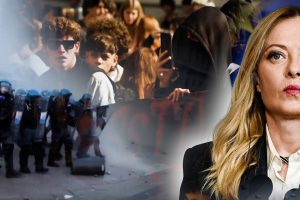
As children begin drafting their Christmas wish lists, politicians on the right and far right are drawing up lists of their own — a flurry of hardline proposals responding to the scenes of chaos and violence that spread across France over the weekend.
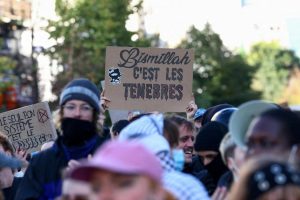
In Paris, Lyon, Marseille, Lille, Bordeaux, Toulouse and Limoges, masked young men attacked shop windows and smashed bus shelters. At least 3,000 businesses are reported to have been ransacked and looted on Saturday and Sunday alone. For some, that was enough to push quick-fix solutions into the debate — measures likely to be ineffective and, in some cases, damaging to public freedoms.
A Martial Tone
Nice mayor Éric Ciotti proposed on Tuesday to “ban all demonstrations,” to “cut family allowances and evict rioters from social housing,” and to “dissolve all far-left terrorist groups.” The martial, deliberately provocative language was designed to leave a mark at a time when many French people were legitimately shocked by the weekend’s violence.
Bruno Retailleau, a conservative candidate for the presidency, called for a state of emergency and the dissolution of La France Insoumise — which would mean the disappearance of France’s second-largest opposition party six months before the presidential election.
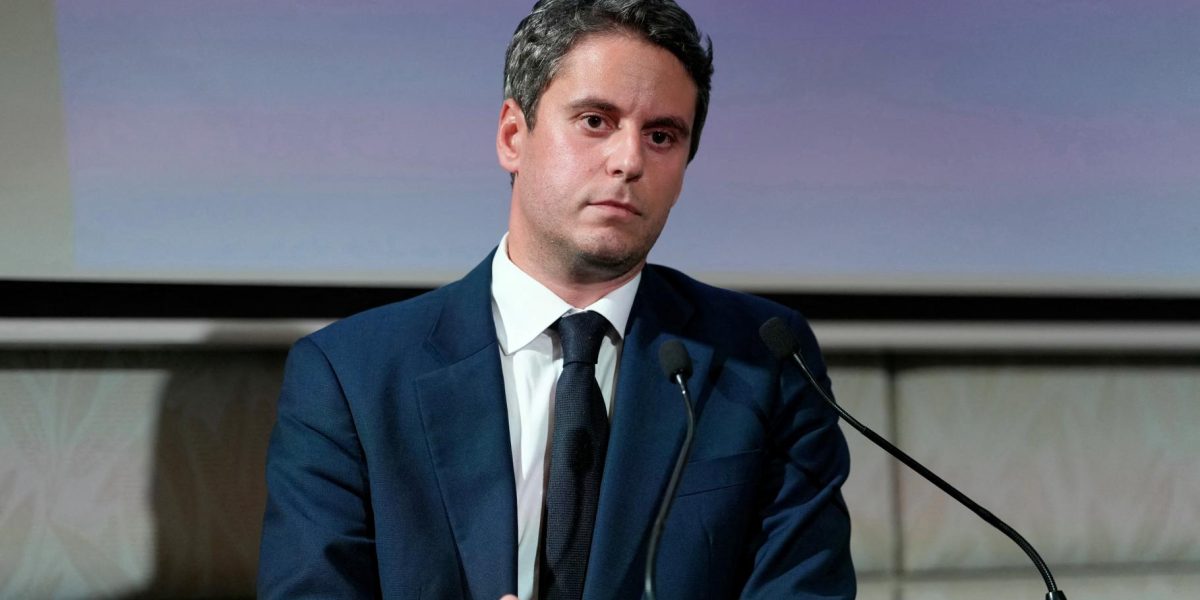
Gabriel Attal, the former prime minister, proposed “temporarily” blocking access to social media. In his view, the platforms have become “the rallying point for vandals and the engine of violent mimicry.” Speaking on RTL, he argued: “There are young people at home who see their friends looting, who get the sense that it goes unpunished, and who then go out and do the same.”
The idea was reformulated later by Renaissance MP Sylvain Maillard. “How can we let social media organize looting? Meetings were set up on TikTok, on Instagram,” he said. He went further, proposing to “ban geolocation as soon as a demonstration spirals out of control” to avoid whipping up enthusiasm. “It becomes a public walkie-talkie,” he said. A similar measure was used in New Caledonia in 2024 — but it was quickly suspended by the Council of State.
With good reason: the measure does not comply with France’s fundamental texts. “There is a fundamental freedom to access online communication services and to express oneself. It is protected by Article 11 of the Declaration of the Rights of Man and of the Citizen, inscribed in our Constitution,” lawyer Claire Poirson told Le Parisien.
Send the Army into Paris?
Another idea has blossomed in recent hours: sending the army into the capital to help police and gendarmes contain the violence. “If we temporarily need armed forces to hold public buildings in static positions, we must do it,” Attal argued. More surprisingly, Ariel Weil, the Socialist mayor of central Paris, appeared open to the idea. “If at some point we are caught short and don’t have enough resources, the presence of the army is better than another night of looting,” he said, while conceding it is “not ideal.”
Once again, specialists warn it is a false good idea. “The army is not prepared for crowd control and the proportionate use of force,” conservative MP Jean-Louis Thiériot told Le Parisien, calling it “an intelligence, doctrinal and military maneuver design error.” In Le Monde, historian Jean-Marc Berlière recalled that “the army has not carried out crowd control in France since 1914,” outside wartime — including in Algeria, where it played a static role guarding sensitive sites.
‘A Shift Toward Authoritarian Rule’
On the left, the flood of proposals has provoked indignation and anger. “The right, which always claims to be the champion of freedom, wants to ban social media, ban protests, ban going out. It will be hard to beat them in the contest for the most dangerous ideas for public freedoms,” denounced Marine Tondelier, the Green candidate for the presidency. Those close to her accuse the right and far right of preparing “a light coup d’état.”
“We need reason and democracy, not a shift toward authoritarian rule,” warned Generation.s MP Benjamin Lucas, who called it “frightening how quickly part of the political class is ready to sacrifice the principles of the rule of law and the Republic.”
Outside politics, Arthur Dénouveaux, president of the association of victims of the November 13 attacks, also voiced concern about restrictions on freedom, even temporary ones. In an op-ed in Le Monde, he wrote that “once again, in the name of those who break things, we will be encouraged to demonstrate less, gather less and be controlled more.”