Ukraine’s ambition to join the European Union is running into mounting resistance from farmers and populist political groups across the bloc, who warn that integrating Kyiv’s vast agricultural sector would undercut their livelihoods and strain EU finances.
When Russian forces invaded Ukraine in 2022, Polish farmer Miroslaw Halej helped distribute food and clothing to refugees crossing the border near his village in eastern Poland. As the war dragged on, that sympathy gave way to resentment — a shift echoed across much of rural Europe.
A Changing Mood on the Border
“The mood has definitely changed,” said Halej, 63, speaking at his farm in Oszczow-Kolonia, a village of about 70 people some 280 kilometres southeast of Warsaw, where chickens roamed nearby.
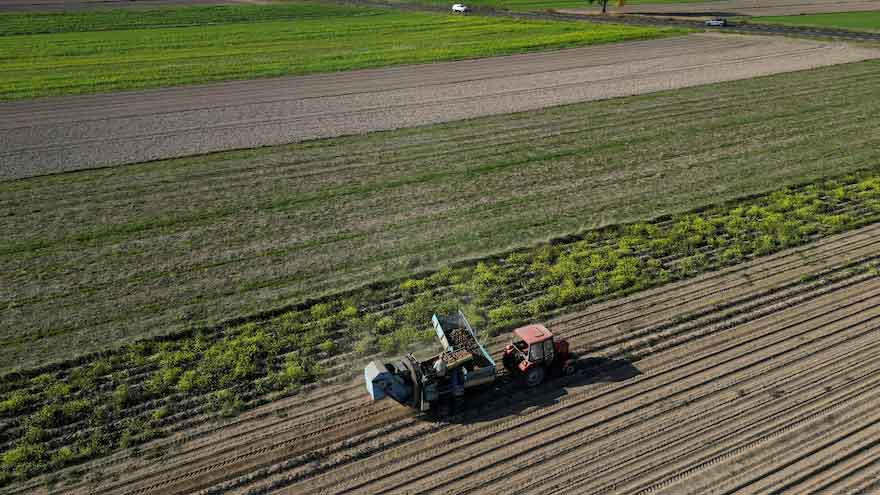
Halej, who grows wheat, beets, rapeseed and beans, has joined a series of Polish farmers’ protests against Ukrainian grain imports. His central concern is that Ukraine’s low-cost agricultural sector could flood Europe with cheap produce once it gains full access to the single market.
“The biggest worry is definitely that the prices of our products would drop,” he said. “If there were a free market, we wouldn’t stand a chance.”
Kyiv’s Strategic Goal
EU membership is a central objective for Ukraine as it seeks to complete its break from Moscow’s orbit. Some European leaders have said they hope to welcome Kyiv into the 450-million-strong bloc within the next few years.
But more than a dozen diplomats and officials from EU member states, speaking privately, were far more cautious, pointing to formidable obstacles that must be cleared first.
“You go around and you realise that, in many countries, politicians don’t expect Ukraine to join in 10 years,” said Gerald Knaus, chairman of the European Stability Initiative think tank. He cautioned, however, that signalling the EU is not serious about accession could have a demoralising effect on Ukraine “that nobody in Europe wants to see.”
Ukrainian Foreign Ministry spokesman Heorhii Tykhyi acknowledged that some scepticism was inevitable but argued that membership would benefit the bloc. “This is not simply Ukraine asking to get inside. Ukraine has the most capable, battle-tested and combat-ready army on the continent — one million people,” he said.
Scepticism Deepens Across the Bloc
Even straightforward accessions require years of negotiations and legal reform. Ukraine faces additional hurdles: uncertainty over the war’s outcome, a history of deep-rooted corruption and its sheer size, which complicates integration.
Public support is also eroding. Only 47% of EU residents say Ukraine should join in the coming years, down from 69% in March 2022, according to an October survey by the German political foundation Bertelsmann Stiftung. In France and Poland, 57% of those polled opposed near-term membership; in Germany, the figure was 59%.
A senior European diplomat, speaking on condition of anonymity, said Ukraine’s accession was not a realistic prospect in the next few years. Another noted that with multiple national elections scheduled next year, many governments will be too preoccupied to champion enlargement.
Analysts suggest that with the United States opposed to Ukraine joining NATO, EU membership may be Kyiv’s best hope of claiming a geopolitical victory once the war ends — and a powerful incentive to pursue democratic reforms.
Populist Pushback and Cost Concerns
The EU has not published a recent estimate of the cost of Ukrainian accession, which would depend on negotiations over market access and transitional arrangements. But far-right politicians are already seizing on the potential price tag.
“If Ukraine joined the European Union, we would be the first losers, doubly so,” Marine Le Pen, the frontrunner for France’s presidential election, posted on X, citing “fierce unfair competition” and a reduction in France’s share of EU farm subsidies. France would likely hold a referendum on any Ukrainian membership bid.
The Alternative for Germany, which leads opinion polls in Europe’s largest economy, submitted a motion to parliament in September urging the government to rule out Ukraine’s accession.
Ukraine’s pre-war population of about 40 million would make it the fifth- or sixth-largest EU member, giving Kyiv substantial political weight in a bloc where decisions are taken by unanimity or by a voting system weighted toward larger states. Under current terms, Ukrainians would eventually be free to live and work anywhere in the EU, and Ukraine would be eligible for significant development grants from Brussels.
Searching for Middle Ground
Such concerns have prompted several proposals to bring candidate countries closer to the EU before full membership and to safeguard decision-making afterward.
German Chancellor Friedrich Merz has floated granting Ukraine a new “associate member” status, allowing Ukrainian officials to attend EU summits and ministerial meetings without voting rights. Kyiv says the idea is unfair because it would leave Ukraine without a voice.
The European Commission has suggested gradually integrating candidate countries into EU programmes and sectors such as energy, transport, digital and defence once they meet criteria for each scheme. It has also proposed limits on financial support and market access for “sensitive agricultural products” from Ukraine.
For farmers like Halej, such safeguards could be enough to reconsider his stance. “Saying, for instance, ‘You can sell this much of this, and that much of that’ — then maybe it could work,” he said. “But as long as the market is uncontrolled, then no.”
Along Poland’s border with Ukraine, some residents say Ukrainian membership would bolster regional security — provided Europeans do not bear the costs. “I believe it is in Poland’s interest for Ukraine to join the European Union — but under certain conditions,” said Grzegorz Drewnik, mayor of the Dolhobyczow municipality, which includes Oszczow-Kolonia.