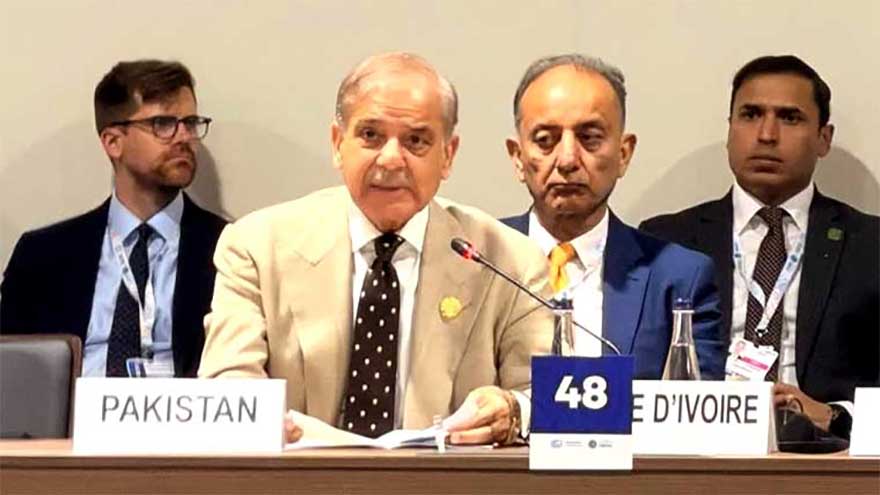
Pakistan requires approximately $188 billion to meet its clean energy ambitions, Prime Minister Shehbaz Sharif told a high-level gathering at the 31st United Nations Climate Change Conference (COP31) in Antalya, Turkiye, urging developed nations to honor their climate finance commitments.
Speaking at a session titled “Transition to Green Energy by 2035: Powering the Future,” the prime minister presented Pakistan’s roadmap for shifting toward renewable power and called for greater international financial support and access to affordable technology.
Clean Energy Already at 55 Percent
Sharif said clean energy sources now account for roughly 55 percent of Pakistan’s overall energy mix. He noted that shortly before departing for Antalya, he inaugurated a key component of the country’s seventh nuclear power plant, which will add 1,200 megawatts of clean electricity to the national grid.
Transport Sector Targeted Under New Auto Policy
Under the recently introduced auto policy, the government has set a target of converting 30 percent of new vehicles to electric power by 2030, supported by incentives including reduced tariffs. The prime minister said all buses and motorcycles purchased by the government in the future will be electric, adding that more than one in every ten motorcycles sold in Pakistan this year is already electric.
Breaking Down the Funding Gap
According to Sharif, the financial requirements are split between two major priorities:
- About $138 billion is needed for low-carbon power generation projects by 2035.
- A further $50 billion is required to replace coal-fired generation with solar energy.
He said expanding the electricity transmission network, building reliable energy storage systems and making modern technology affordable all demand massive investment — a burden, he argued, that Pakistan’s debt-strained economy cannot carry alone.
Call for Concessional Finance
The prime minister urged global partners to provide financing on concessional terms and to ease the transfer of affordable technology, warning that clean energy targets can only be met through collective effort and timely support. He said the 35 percent target for 2035 is achievable only with concessional capital and cheap technology transfer.
Sharif also pressed the international community to adopt a development model that balances economic growth with environmental protection, saying countries must be able to meet their people’s energy needs and grow their economies without harming the planet. He expressed determination that clean energy pledges be fulfilled through shared commitment and practical action.