Iran’s foreign minister has said the dispute between Tehran and Washington cannot be settled through threats or military force, insisting that negotiations remain the only workable route to ending the conflict.
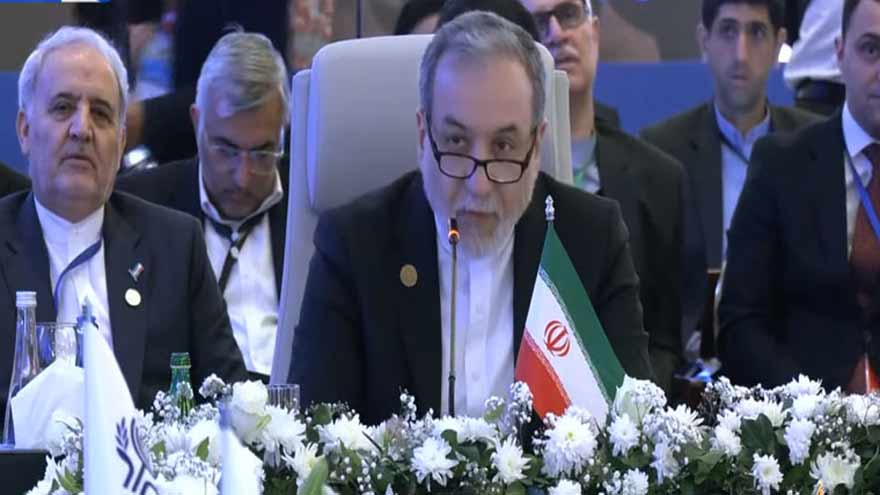
Abbas Araghchi made the remarks while addressing a meeting of the Economic Cooperation Organization (ECO) Council of Foreign Ministers, where he also pressed for stronger regional coordination and concrete steps to protect Palestinians.
Praise for Pakistan and Qatar Mediation
Araghchi acknowledged the diplomatic efforts of Pakistan and Qatar in trying to resolve the Iran-US dispute, and called for closer communication among neighbouring states. He argued that collective regional action is needed to reduce tensions rather than relying on outside actors.
Concern Over Gulf and Hormuz Security
The Iranian minister said that attacks by the United States and Israel on Iran had generated insecurity across the Persian Gulf and the Strait of Hormuz. He stressed that the strategic waterway cannot be considered separately from Iran.
He urged regional countries not to allow their territory to be used for attacks against other states, and called for a regional security framework built on the principle of non-aggression.
- Araghchi called for preventing interference by external powers in regional affairs.
- He said sustainable cooperation is essential to restoring maritime traffic through the Strait of Hormuz.
- He proposed a non-aggression-based security arrangement among regional states.
Gaza Situation Described as Alarming
Turning to Gaza, Araghchi described the humanitarian situation as alarming and demanded that Israel lift restrictions on aid deliveries. He said the plight of Palestinians in Gaza and the occupied West Bank poses serious questions for the international community.
He urged world powers to take practical measures to protect Palestinians rather than remain silent.
ECO Summit Set for Tehran
Araghchi also announced that the 18th ECO Summit will be held in Tehran on December 4, underscoring the bloc’s role as a platform for regional economic and political coordination.