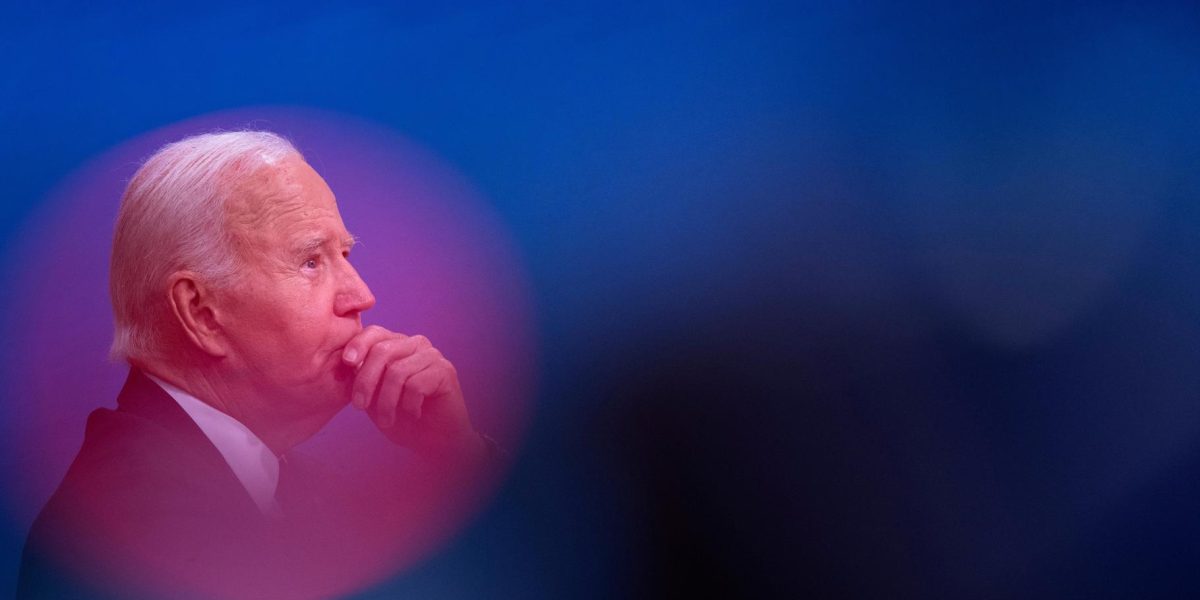
Former President Joe Biden vigorously defends his decision to seek a second term in 2024 in his new memoir, published Tuesday, November 17 — a level of conviction he rarely displayed during the campaign itself. He also downplays the consequences of his disastrous televised debate performance, asserting that his critics could “never cite a single thing related to the presidency that I didn’t accomplish.”
HuffPost US obtained an advance copy of the 465-page book, titled Promise Me, America. Biden’s ongoing battle with prostate cancer limits his ability to promote the memoir.
The book reveals no regrets from the former president about his time in the White House — nor about his decision to run again at 82. “Some say I was deluding myself in thinking I could do this job at my age. My answer is simple: I was already doing the job,” he writes of his candidacy.
The final chapters, devoted to his decision to seek a new term, his withdrawal from the Democratic primary race and the defeat of former Vice President Kamala Harris — who succeeded him as the party’s nominee — paint a portrait of a man determined to answer his detractors.
Blame Placed on Media and Democratic Leaders
Biden dwells on his victories in the 2024 Democratic primaries, which faced little competition, and refuses to see them as mere confirmations of an inevitable outcome. He dismisses the idea that his age was a genuine obstacle to governing, framing it instead as a matter of appearance. He sought to overcome it with the help of Mitt Romney, then a Republican senator from Utah, who advised him to lengthen his stride in public.
According to Biden, perceptions of his debate performance were shaped more by the media and party officials than by his own difficulties speaking on stage. “The press and the pundits had decided my performance was disqualifying,” he writes, insisting that polls showed no decline in his candidacy against Donald Trump.
Internal Democratic Party polling at the time, however, indicated he risked losing several states traditionally favorable to his camp: Virginia, New Jersey, New Mexico, Maine and New Hampshire. He adds: “But the data wasn’t the point. The narrative was. And the narrative was bad. Everyone seemed to agree that I had lost. Worse still, everyone seemed convinced that nothing could be fixed.”
Bitterness Seeps Through the Pages
The image Biden has always cultivated — that of a jovial grandfather — steers him away from the virulent attacks another author might have unleashed in such a book. His bitterness nonetheless surfaces, both toward what he sees as the press’s lack of recognition for his record and toward what he considers the disloyal conduct of certain Democratic officials, including Nancy Pelosi and Chuck Schumer.
Recalling the NATO summit he hosted in the days following the debate, he notes that some articles focused more on a verbal slip — he had inadvertently called Kamala Harris “Vice President Trump” — than on the results achieved. “It was the perfect illustration of what was happening to me. The fact that I was leading a NATO stronger and more united than ever, and leading efforts to confront the worst aggression Europe had seen since World War II, didn’t matter. But confusing Harris and Trump? That was serious,” he writes.
Biden also invokes Donald Trump repeatedly to justify his own decisions, asserting that Americans could never have preferred Trumpist chaos to the stability of his leadership. The threat posed by Trump also explains, in his view, why he had no choice but to run: “I was the only one who had ever beaten Donald Trump,” he writes. “And I believed I was best positioned to beat him again.”
Democrats have largely distanced themselves from Biden, who left the White House with the lowest approval rating of any Democratic president in forty years, even as the party won both chambers of Congress in this year’s midterm elections. Many made no secret of their satisfaction that the publication of his memoir was postponed until after the vote.