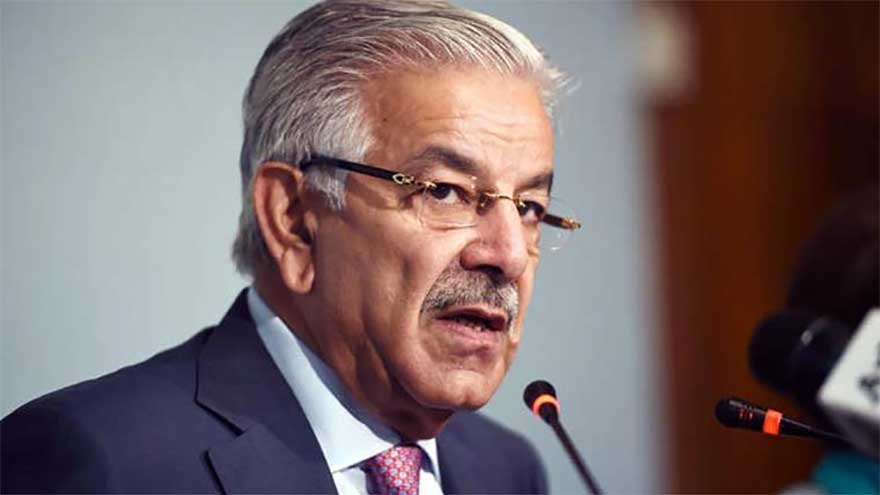
Pakistan’s Defence Minister Khawaja Asif has called for collective awareness, a common strategy and mutual cooperation to safeguard global peace and security, warning that piecemeal approaches will not suffice in an increasingly fragile world.
Addressing the Schuman Security and Defence Forum at the European Parliament in Brussels, the minister placed Pakistan’s long-standing contribution to international peace at the centre of his remarks, particularly its role in United Nations peacekeeping operations.
Decades of Peacekeeping Service
Khawaja Asif said roughly 237,000 Pakistani military and police personnel have served in 48 UN peacekeeping missions over the decades, while 183 Pakistani personnel have lost their lives in the service of international peace.
He warned that an abrupt reduction in peacekeeping operations in conflict-affected regions could further heighten human security risks, arguing that drawdowns must be handled with care rather than haste.
Realistic Mandates and Fair Representation
The defence minister stressed that peacekeeping missions must be built on realistic mandates, adequate resources and a clear connection to sustainable political solutions.
- Troop- and police-contributing countries should be effectively represented in the formulation of peacekeeping mandates.
- Missions require resources commensurate with their assigned responsibilities.
- Peacekeeping must be tied to durable political outcomes rather than stand-alone military deployments.
Redefining Security Beyond the Absence of War
Khawaja Asif maintained that peace should not merely be defined as the absence of war, insisting that human security must remain a priority for achieving lasting stability.
He noted that challenges such as climate change, food insecurity and economic vulnerabilities are intensifying conflicts, underscoring the need for coordinated international efforts and stronger global cooperation.
The forum address positions Pakistan as an advocate for a more inclusive and adequately resourced multilateral security architecture, one in which the voices of personnel-contributing nations carry weight in the decisions that shape missions on the ground.