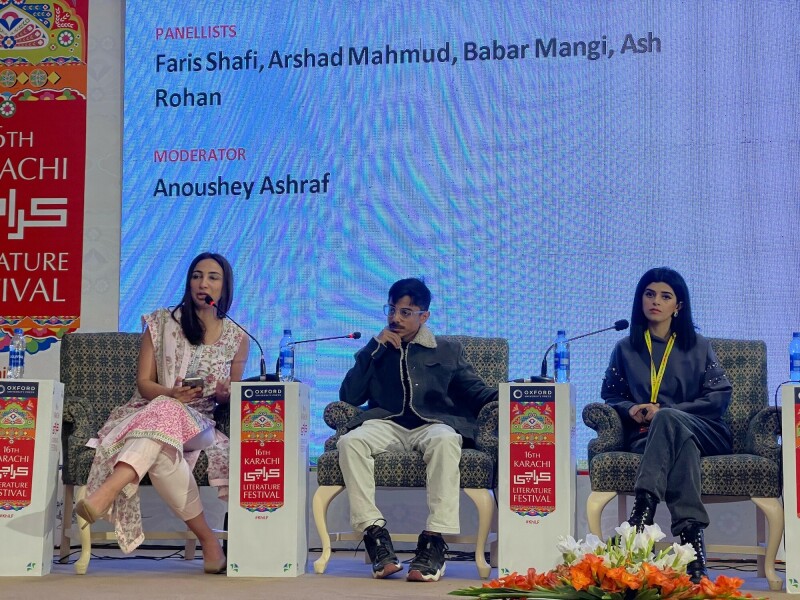
Karachi Literature Festival (KLF) witnessed a lively discussion on the emerging trend of Urdu rap during a panel discussion. Renowned Coke Studio artist Babar Maqsood emphasized the importance of Pakistani hip-hop music, stating the need for people to develop a taste for this genre of music. The panel also included other artists like Arshad Mahmood and upcoming rapper Ash Rohan, with notable rapper Faris Shafi absent from the occasion. Hosted by Anoushey Ashraf, the session delved into the rising popularity of hip-hop, its role in societal resistance, and the criticism it faces from older audiences.
Arshad Mahmood remarked, “Someone asked me what is the benefit of Ghalib’s poetry when no one understands it today. I said I cannot blame Ghalib for people’s ignorance.” Maqsood stressed that rap is a form of expression that allows artists to freely express themselves. When asked why older generations do not accept rap as music, Maqsood explained, “People think there is no melody in rap, whereas we often rap on two to three notes. It is actually a fusion of poetry and rhythm.” Mahmood further added, “I am not interested in listening to rap, but I understand that it has a lot to say to the youth; however, they need better words to express themselves.”
Rohan suggested during the session that blending rap with qawwali or classical music could introduce older audiences to the world of this music. Maqsood commented, “Pakistani hip-hop music is better than ever today. Just as people take time to enjoy good food, they need to take time for good music as well.” He also emphasized that the increasing popularity of hip-hop is due to people engaging with it, leading them to better understand its nuances. The participating artists in the panel also highlighted that hip-hop music can coexist with classical music. Maqsood revealed that he is currently working on a 12-track album, with each song being different.
The session marked an intriguing discussion on the advancement and future of hip-hop music in Pakistan, addressing contemporary music transformations and challenges.