Iran targeted a US air base in Kuwait on Thursday, retaliating for American strikes on an Iranian drone operation, in a sharp escalation that President Donald Trump fueled by publicly dismissing a reported compromise over the Strait of Hormuz. The exchange of fire, though described by Washington as limited and defensive, underscored the extreme fragility of the three-month-old ceasefire.
The violence erupted as US Central Command confirmed its forces had shot down five Iranian attack drones and struck a ground control station in the port city of Bandar Abbas. The Pentagon said the facility was preparing to launch a sixth drone. Kuwaiti forces subsequently intercepted a ballistic missile fired towards the country, which hosts a major American military installation.
“These actions were measured, purely defensive and intended to maintain the ceasefire,” a US official, speaking on condition of anonymity, told Reuters.
Kuwait Condemns “Blatant Violation”
The Iranian attack drew a furious response from Kuwait, which condemned the missile and drone strikes as a “blatant violation of” and demanded Tehran immediately halt what it called a serious escalation. The Islamic Revolutionary Guard CorpsIRGC) claimed responsibility, stating via the Tasnim news agency that it had targeted the base responsible for the “early-morning attack” near Bandar Abbas airport and warned that any repeat would lead to a “more decisive response.”
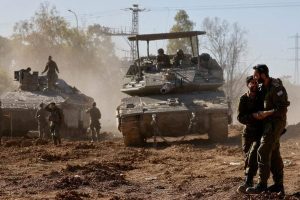
The flare-up coincided with Eid ul Adha celebrations and rippled across a region already engulfed in conflict triggered by US and Israeli attacks on Iran in late February. In Lebanon, Israel announced it had begun striking Hezbollah infrastructure in Tyre and carried out a separate strike in Beirut, while air raid sirens sounded in northern Israel.
Trump Threatens Oman, Rejects Joint Control
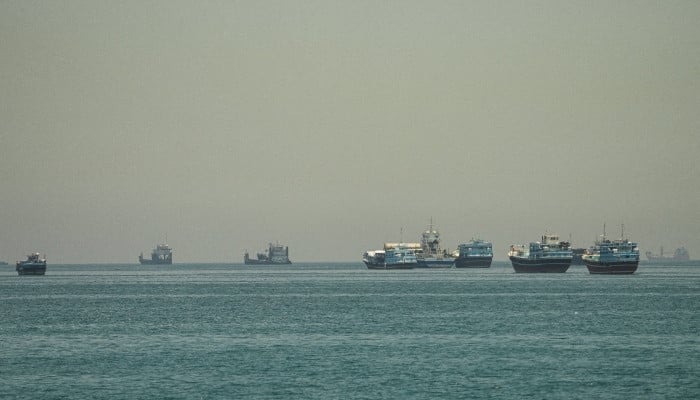
The military action followed a volatile cabinet meeting where President Trump categorically rejected an Iranian state TV report suggesting an unofficial draft agreement was near. The reported deal would have restored shipping through the Strait of Hormuz to pre-war levels within a month, with Iran and Oman jointly managing traffic.
Trump insisted no single country would control the strategic waterway and appeared to issue a direct threat to Oman, a longstanding US ally. “Nobody’s going to control (the strait),” Trump said. “It’s international waters, and Oman will behave just like everybody else or we’ll have to blow them up. They understand that, they’ll be fine.”
The White House called the Iranian report a “complete fabrication.” Tehran expressed solidarity with Oman following what it termed “US officials’ threats,” while the IRGC reasserted its dominance over the strait, claiming it had stopped two vessels and allowed only 26 to pass in the previous 24 hours—a fraction of the pre-war daily average of over 100 ships.
Oil Prices Surge as Diplomacy Stalls
Global markets reacted swiftly to the breakdown in confidence. Oil prices rebounded sharply, with US crude futures climbing around 3%, reversing a 5% drop from the previous day. Stocks fell and the dollar rose as investors priced in prolonged geopolitical risk and potential inflation impacts.
The path to a broader peace deal remains mired in complex demands. Iran is seeking the release of frozen funds, an end to a US blockade on its ports, and sanctions relief. The US Treasury Department moved in the opposite direction on Wednesday, imposing new sanctions on Iran’s Persian Gulf Strait Authority, body set up to manage passage through the waterway.
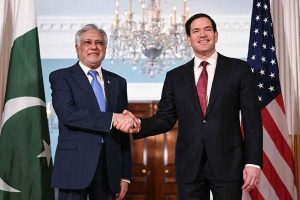
Iranian Supreme Leader Mojtaba Khamenei urged legislators to preserve national unity and address economic hardship, while a senior security official insisted on the fund release. US Secretary of State Marco Rubio held a firm line on the nuclear issue. “The bottom line is Iran’s never going to have a nuclear weapon,” Rubio stated, as Iranian sources indicated the nuclear programme would be discussed in further talks over 60 days—a timeline potentially unacceptable to hardliners in Washington.