Iran’s diplomatic tone shifted sharply over the weekend, moving from optimism to a hardened stance on its nuclear program. Foreign Minister Abbas Araghtchi, following discussions with US officials in Oman, has reaffirmed Tehran’s red lines and openly doubted Washington’s commitment to genuine negotiations.
No Concession on Enrichment, Even Under Threat of War
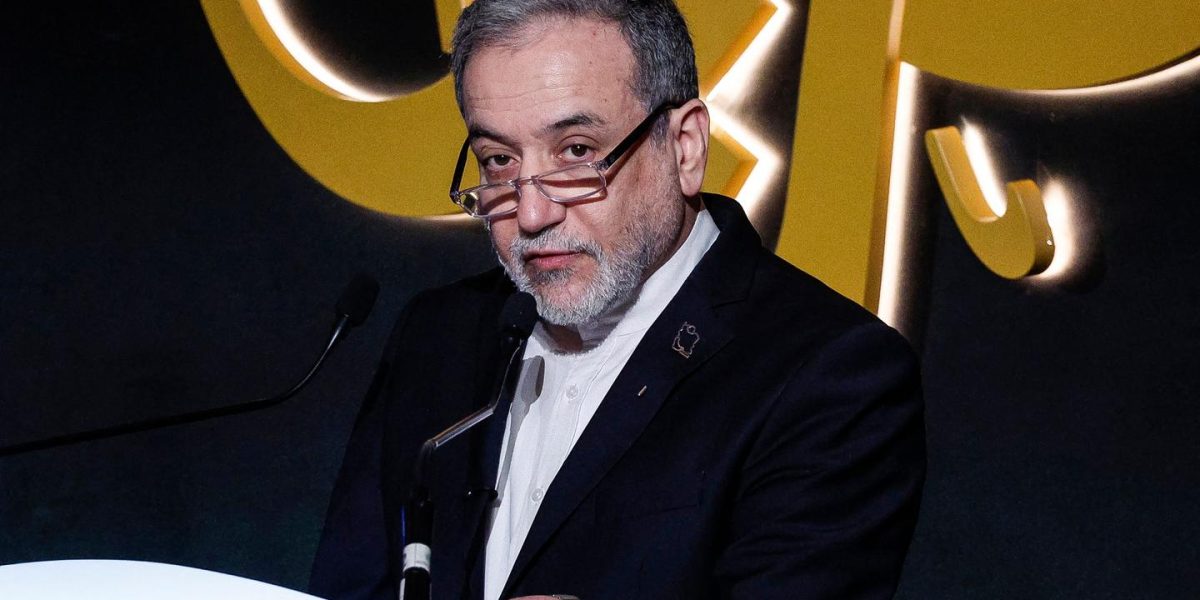
Speaking at a forum in Tehran on Sunday, Araghtchi delivered a defiant message. He stated Iran would not yield to repeated US demands to abandon uranium enrichment, a core element of its nuclear program. “Even if a war is imposed [on Iran],” he declared, emphasizing the heavy price Iran has paid for what it calls a peaceful nuclear program.
“Why do we insist so much on [uranium] enrichment and refuse to give it up even if war is imposed on us? Because no one has the right to dictate our conduct,” the diplomat insisted.
From “Positive” Atmosphere to Questioning US Intent
The remarks marked a rapid change. On Saturday, Araghtchi had described the atmosphere in Muscat as “very positive” and agreed with Washington to hold a new session of talks “soon.” By Sunday, he was questioning the “seriousness” of the United States in “conducting real negotiations.”
Iran will “evaluate all the signals and decide on the continuation of negotiations,” he told a press conference attended by AFP.
Confidence Measures Tied to Sanctions Relief
Araghtchi did mention a potential path forward, albeit vaguely. He said Iran could consider “a series of confidence-building measures concerning the nuclear program” in return for the lifting of international sanctions crippling its economy. This conditional offer underscores the central trade-off at the heart of the stalled negotiations.
Military Posturing and Diplomatic Signals
The foreign minister also dismissed US military pressure. “The American military deployment does not scare us,” he said, a day after US envoy Steve Witkoff visited the USS Abraham Lincoln in the Gulf. In recent weeks, President Donald Trump has repeatedly threatened military intervention against Iran.
Trump himself called Friday’s discussions—the first since US airstrikes on Iranian nuclear sites in June—”very good” and said they would continue “early next week.” Iranian President Massoud Pezeshkian stated on Sunday that the talks, held with support from friendly regional governments, “constitute a step forward.”
The conflicting statements highlight the fragile and uncertain state of diplomacy, with deep mistrust and fundamental disagreements over uranium enrichment continuing to block a breakthrough.