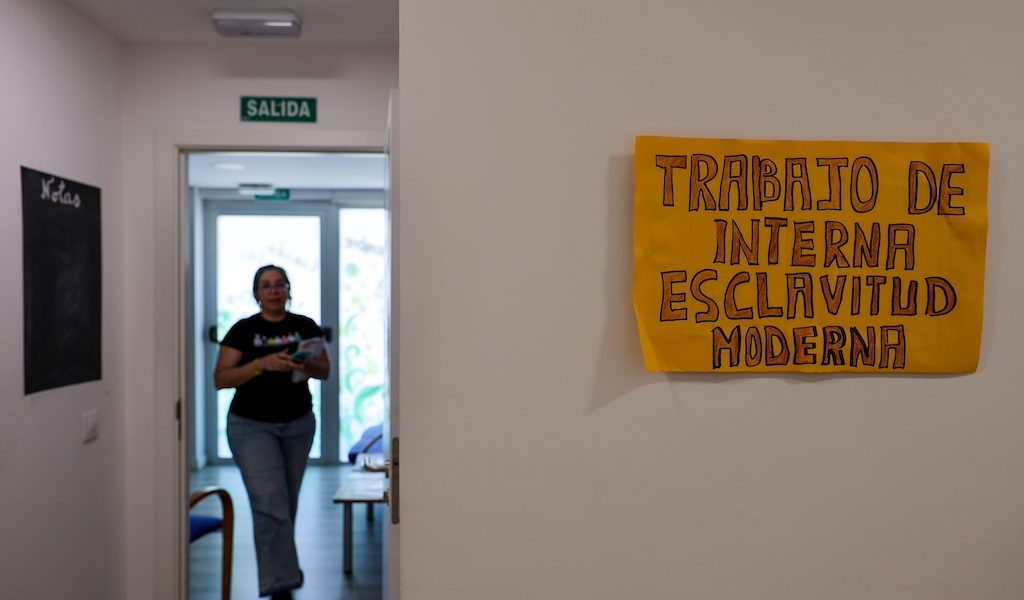
When Dalisay was eighteen, she left her two infant daughters in the Philippines to work as a live-in domestic worker in Madrid. Shortly after starting her job, her employer’s husband began a disturbing ritual. “He would wait until his wife was away on a business trip and then walk around the house naked,” she recalls. Like many migrant women in her position, Dalisay felt trapped, scared, and unsure if what she was experiencing constituted abuse.
A Widespread, Underreported Crisis
A nine-month investigation, including in-depth interviews with 106 female migrant domestic workers across Spain, has uncovered a pervasive but hidden trauma of gender-based violence in private households. Half of the women surveyed reported experiencing such acts, ranging from verbal abuse and exhibitionism to rape. Strikingly, not a single one filed a police report.
The reasons for their silence are a web of vulnerability: fear of job loss, deportation, police distrust, shame, and a belief that their suffering would not be taken seriously. “You put everybody else above yourself,” explains Daniela, a survivor from El Salvador. “This is why we are the perfect victim.”
Blurred Lines and Unrecognized Abuse
The investigation reveals a critical gap in recognizing abuse. Many workers, especially those from the Philippines, did not initially identify coercive control, isolation, or being forced to witness sexual acts as gender-based violence. Teresa, a Filipina teacher working as a domestic worker for thirty years, was repeatedly exposed to her employer’s genitals. “I didn’t know what to do. It was a very scary time,” she says, yet she initially shook her head when asked if it was gender-based violence.
For live-in workers, the home-as-workplace dynamic dangerously blurs boundaries. One worker described being denied house keys, effectively imprisoning her at night. Another, named Anna, was held captive by an employer who refused to let her leave unless she signed away her employment rights.
Highly Educated, Exploited, and Silenced
The data paints a portrait of a deeply exploited workforce: 42% hold university degrees, yet four out of five earn less than €15,000 annually. Two-thirds live in their employers’ homes, increasing their isolation and risk. Many are undocumented, and most are primary providers for families abroad, a pressure that forces them to endure unacceptable conditions.
Daniela’s story is a harrowing example. A trained lawyer who migrated for her family’s safety, she was violently raped by her employer. She never reported it, fearing it would jeopardize her quest for permanent residency. “I paid for this with my dignity, with my own life,” she says.
Legal Reforms Fall Short for the Most Vulnerable
While Spain has made strides, such as ratifying the ILO Domestic Workers Convention and launching the Prevención 10 platform to formalize homes as workplaces, critical gaps remain. These measures often fail undocumented workers, who fall outside the protection system. Edith Espínola, a director at the Empowerment Center for Domestic and Care Workers (CETHYC), notes that laws on paper rarely match daily reality. “Inside someone’s home, domestic work becomes invisible, and the laws do not really protect these women,” she states.
Language Barriers and Unequal Access to Justice
The disparity in reporting between Latin American and Filipina workers highlights a significant justice barrier: language. Many Filipina workers speak little Spanish, limiting their access to support networks, legal knowledge, and organizations like CETHYC, which operates exclusively in Spanish. In contrast, Spanish-speaking workers are often more aware of their rights and political advocacy efforts.
A Call for Tangible Change and Empowerment
The investigation underscores an urgent need for accessible, culturally sensitive support and stronger enforcement of existing laws. Grassroots organizations provide crucial education on gathering evidence and legal rights, but their reach must expand.
Despite her trauma, Daniela has found resilience, now running a small business in Madrid. Yet she carries a profound regret. “I wish I hadn’t been so afraid to report it,” she says. “If anyone else is in this situation, they should do it because they are a person, a human being, and we deserve to enjoy each and every right we have.” Her message is a powerful call to transform the everyday reality for hundreds of thousands of invisible workers.