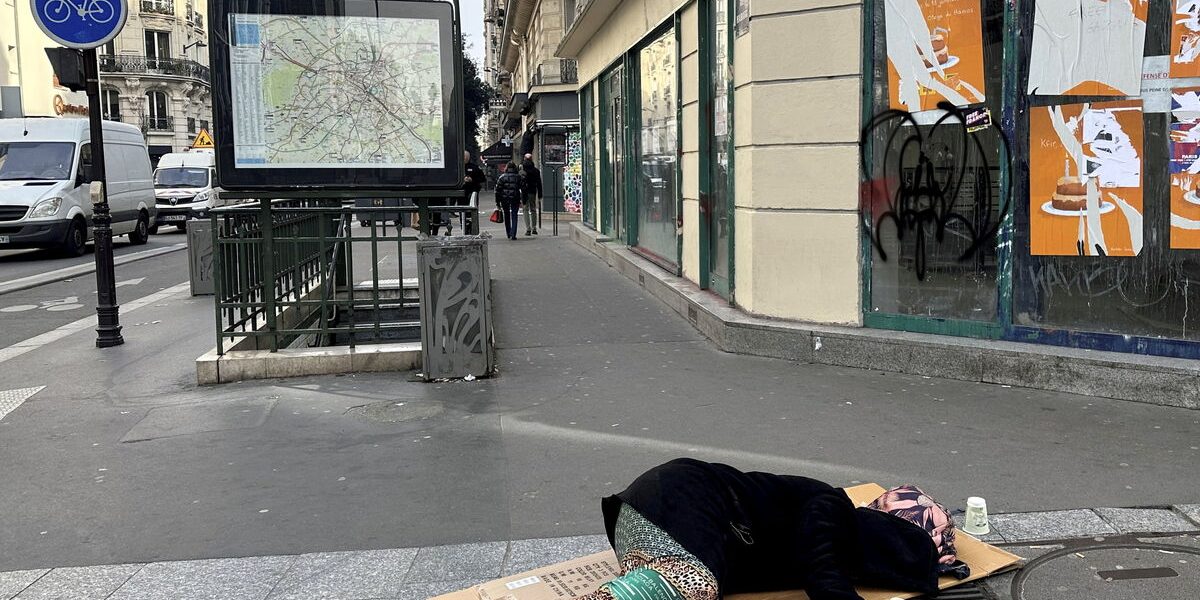
The number of people sleeping rough in Paris has risen sharply, according to the latest annual “Night of Solidarity” count. The survey, conducted on the night of January 22-23, recorded 3,847 homeless individuals in the French capital—a 10% increase from the previous year. The situation in the surrounding suburbs is even more acute, showing a dramatic 32% rise.
A Night to Count and Understand
More than 4,200 volunteers and professionals, including 2,000 in Paris, combed streets, parks, train stations, and encampments for the coordinated count. Organized with the methodological support of the Parisian Urban Planning Workshop (Apur), the initiative aims to quantify an often-invisible population and better inform public policy. The goal extends beyond a simple tally to understanding where and under what conditions people are sleeping, and whether they are isolated or in groups.
Explosion of Large Encampments
The increase in Paris is largely driven by a proliferation of large encampments. Nearly one in five individuals (721) was encountered in a group of more than 20 people, a significant jump from 174 the previous year. Sixteen encampments of this scale were identified—more than double the number from 2025.
Teams counted individuals in diverse locations:
- 400 on the slopes of the ring road (périphérique) and in parks
- 233 in the Bois de Boulogne and Bois de Vincennes woods
- 210 in Paris public transport (RATP) stations
- 171 in national rail (SNCF) stations
- Others in parking lots, public hospitals, and social housing addresses
Municipal Effort Amid State Cuts
The count does not include people in state-run emergency shelters. Officials note a concerning reduction in state-funded beds. By December 31, 2025, there were 44,000 regulated emergency shelter places for the Paris public, nearly 1,800 fewer than in 2023.
The Paris municipality claims it has created 1,000 additional shelter spots since 2023 by converting municipal buildings, now housing 1,800 people. Two new centers opened this winter in the 5th and 15th arrondissements.
“We are compensating for the state’s closures. Without a common strategy, we are just putting a bandage on an open wound!” said a deputy mayor in charge of emergency housing. The official also highlighted that 419 people died on the streets of Paris in 2024, insisting, “The law provides for unconditional emergency shelter. The state must respect the law!”
Sharp Rise in the Inner Suburbs
In the 33 participating suburban communes, the increase was even more pronounced, with 248 more people counted than the year before. Two cities in Seine-Saint-Denis now exceed the symbolic threshold of 100 people counted: Saint-Denis (395) and Saint-Ouen-sur-Seine (133).
In total across the suburbs, 60% of people were met on the street, with 40% in specific areas like encampments along the A86 highway, hospitals, the La Défense business district, or underground parking lots.
A Glimmer of Hope in Civic Engagement
Facing the scale of the crisis, officials point to robust civic engagement as a positive sign. “2,000 volunteers showed up,” noted the deputy mayor, who also expressed encouragement from citizen-led proposals, such as a collective suggesting 1% of the city’s budget be dedicated to combating homelessness.
The stark figures confirm a worrying trend and underscore the magnitude of the social challenge facing the Paris region.