Defiant Stance as Economic Crisis Deepens
Cuban leader Miguel Díaz-Canel declared on Tuesday that the United States would face “unbreakable resistance” if it attempts to take over the island nation. This defiant statement comes as communist authorities grapple with a nationwide electricity blackout and escalating economic pressure from Washington. The Cuban government is confronting what it describes as “increasingly crushing pressure,” including a stringent US oil blockade and explicit demands from the Trump administration for political change.
US Demands and Diplomatic Denials
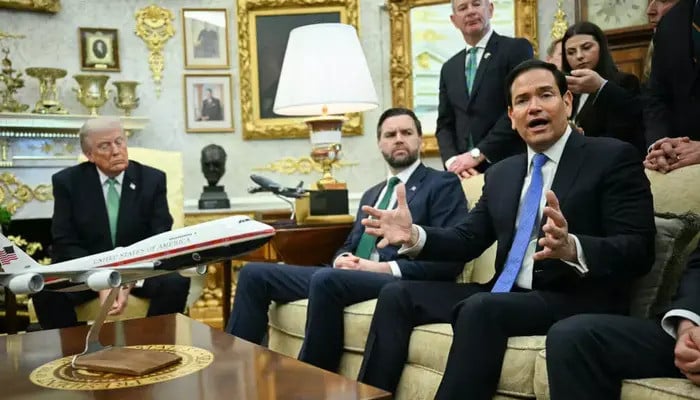
US Secretary of State Marco Rubio, a prominent Cuban-American critic of the regime, stated that recent Cuban reforms allowing exiles to invest and own businesses were insufficient. “What they announced yesterday is not dramatic enough. It’s not going to fix it. So they’ve got some big decisions to make,” Rubio told reporters at the White House. This follows President Donald Trump’s remarks on Monday, where he said, “I do believe I’ll be… having the honor of taking Cuba,” and indicated he would “be doing something with Cuba very soon.”
However, Rubio later denied a New York Times report claiming the administration had called for Díaz-Canel’s ouster, labeling the article “fake” and criticizing its sources.
Cuba’s Conditions for Dialogue
In response, Cuban officials expressed openness to broad talks with Washington but drew a firm line on political concessions. Tanieris Diéguez, Cuba’s deputy chief of mission in Washington, told AFP that while the two countries have “a lot of things to put on the table,” Cuba’s political system is non-negotiable. “Nothing related with our political system, nothing with our political model — our constitutional model — is part of the negotiations, and never will it be part of that,” she asserted. “The only thing that Cuba asks for any conversation is respect to our sovereignty and to our right to self-determination.”
Economic Desperation: Blackouts and Blockades
The geopolitical tensions unfold against a backdrop of severe economic hardship in Cuba. A total electricity breakdown on Monday plunged the country into darkness, with power only partially restored to two-thirds of the nation and 45% of the capital, Havana, by Tuesday. The island’s aging power grid, already crippled by daily outages of up to 20 hours in some areas, has been devastated by a de facto US oil blockade. No oil has reached Cuba since January 9, following the US-backed ousting of Venezuela’s socialist leader Nicolás Maduro, Cuba’s chief regional ally and oil supplier.
“What we fear all the time is that the blackout will drag on and we will lose the little bit that we have in the fridge, because everything is so expensive,” said Olga Suárez, a 64-year-old retiree in Havana. The crisis has also forced airlines to curtail flights, dealing a further blow to the vital tourism sector.
A Nation on Edge
Adding to the sense of crisis, a 5.8-magnitude earthquake struck off Cuba’s coast early Tuesday, though no casualties or damage were immediately reported. As President Trump openly muses about “taking” or “freeing” Cuba, calling it a “very weakened nation,” the stage is set for a prolonged confrontation. Díaz-Canel’s promise of “unbreakable resistance” signals that Cuba’s communist government is preparing to dig in, setting the two long-time adversaries on a collision course amid one of the island’s most profound economic and energy crises in decades.