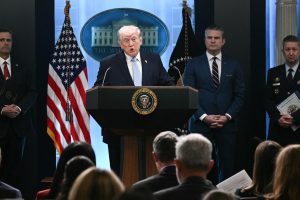
President Donald Trump has identified a “top person” within the Iranian system as a key interlocutor with the United States, describing the individual as “most respected” and in an “unenviable position.” This revelation comes amid an ongoing Israeli-US military campaign against Iran, now in its fourth week, and follows the assassinations of Supreme Leader Ali Khamenei and National Security Chief Ali Larijani. Trump has deliberately withheld the figure’s name, stating, “I don’t want him to be killed,” fueling intense speculation about who holds this pivotal, yet perilous, role.
The Leading Contenders: Five Key Figures
With Iran’s traditional power structure in flux, analysts are scrutinizing several senior officials who might be engaging with US envoys. Here are the five most likely candidates based on their positions, profiles, and recent activities.
1. Parliament Speaker Mohammad Bagher Ghalibaf
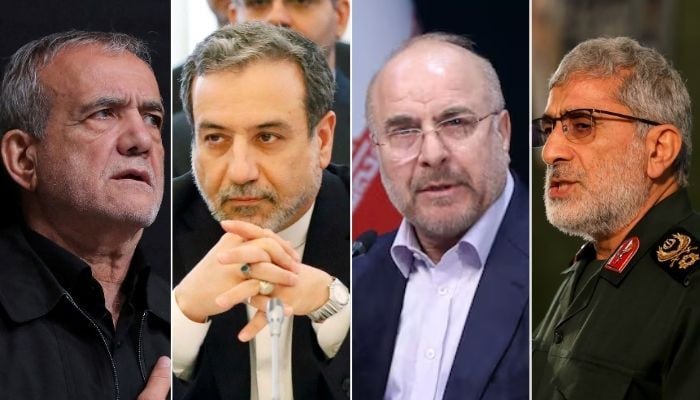
Many analysts point to Mohammad Bagher Ghalibaf as the de-facto wartime leader. Following the deaths of Khamenei and Larijani, and with the new Supreme Leader Mojtaba Khamenei unseen in public, Ghalibaf’s influence has grown. His career spans three decades, including roles as commander of the Revolutionary Guards’ aerospace forces, Tehran police chief, mayor, and now parliament speaker. Despite his ambition—evidenced by three failed presidential bids—he has publicly denied negotiating with the US, calling such reports “fakenews” in a post on X.
2. President Masoud Pezeshkian
Elected in 2024 after his predecessor’s death, President Masoud Pezeshkian represents the more moderate wing of Iranian politics. However, the president is not the ultimate authority in Iran; that power resides with the Supreme Leader. The post-Khamenei era has left the power structure unclear. Pezeshkian recently appeared at a pro-Palestinian rally, engaging with the public, but his direct involvement in high-stakes US talks remains uncertain.
3. Foreign Minister Abbas Araghchi
A veteran diplomat, Foreign Minister Abbas Araghchi has been directly involved in communications with the US. He represented Iran in failed pre-war talks in Oman with US envoys Steve Witkoff and Jared Kushner. According to recent reports, Araghchi and Witkoff have had “direct communication” in recent days, described by Iranian officials as “essentially probes on how to de-escalate the conflict.” Despite his diplomatic experience and public defense of Iran’s stance, his role may not equate to the “top person” status suggested by Trump.
4. Revolutionary Guards Commander-in-Chief Ahmad Vahidi
As the third commander-in-chief of the Revolutionary Guards in less than a year, Ahmad Vahidi has maintained an exceptionally low profile during the current conflict. His predecessors were killed in earlier hostilities. Vahidi has made no public appearances, with only one official statement issued in his name this March, offering condolences for a slain militia commander. His covert stance makes him a dark horse candidate.
5. Quds Force Commander Esmail Ghaani
Esmail Ghaani leads the Quds Force, the external operations arm of the Revolutionary Guards, succeeding the famed Qassem Soleimani. His status has been shrouded in mystery since reports of his death in June 2025 were later contradicted by his re-emergence. He has faced internal pressure over alleged intelligence failures, including the killing of Hezbollah’s chief in Lebanon. His influence and current role are subjects of intense speculation.
A Delicate Dance of Diplomacy and Survival
The identity of the “top person” remains a closely guarded secret, underscoring the extreme risks involved in any dialogue during wartime. With Iran’s leadership decimated by targeted strikes and its hierarchy in disarray, this individual’s role is as critical as it is dangerous. The US engagement, as described, appears focused on exploring pathways to de-escalation, but with Trump’s reluctance to reveal the interlocutor, the mystery deepens, highlighting the fragile and clandestine nature of these communications.