A fiery televised debate has laid bare the deep international divisions over the ongoing Iran-Israel conflict, featuring a stark confrontation between a Pakistani senator and a former Israeli general over who holds the strategic advantage.
Clash of Narratives on Al Arabia
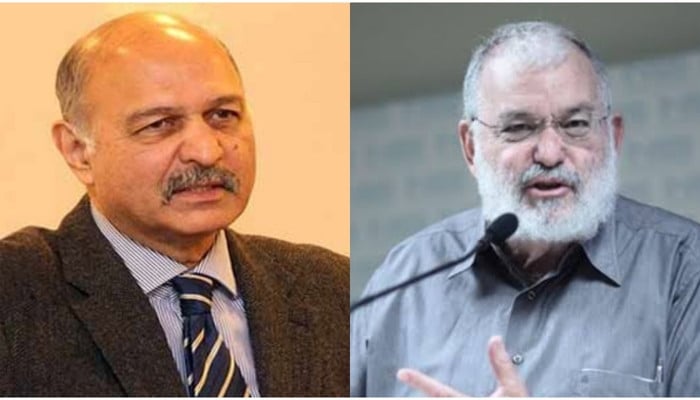
The heated exchange occurred on Al Arabia English between Senator Mushahid Hussain Syed and former Israeli National Security Adviser Yaakov Amidror. The debate centered on competing claims about a proposed peace deal and the broader trajectory of the war, which began with US-Israeli strikes on Iran in late February.
Senator Claims Iranian Resilience and Strategic Win
Senator Mushahid Hussain argued forcefully that Iran has emerged in a position of strength. He asserted that the US-Israeli strategy had “badly failed” and that the conflict was part of a wider attempt to politically reshape the Middle East in line with a “Greater Israel” vision.
He pointed to Iran’s control of the Strait of Hormuz as a critical strategic lever, claiming Tehran had successfully kept the vital oil chokepoint shut. “Neither President Trump nor Prime Minister Netanyahu could have imagined that Iran would still be standing firmly in the fourth week of the conflict with full force,” Mushahid stated.
Ex-Israeli General Defends Military Campaign
In contrast, former Maj. Gen. Yaakov Amidror defended Israel’s military actions, insisting operations were degrading Iran’s capabilities as planned. He rejected notions that Israel was running low on defensive resources, stating the country could sustain operations for weeks.
When questioned about the Iron Dome’s effectiveness, Amidror claimed it was performing “very well” and had intercepted 90% of attacks. However, he later acknowledged that the majority of interceptions were actually conducted by the more advanced Arrow-3 system, not the Iron Dome.
Analyst Warns of Protracted War
The debate also featured US analyst Brandon Weichert, who warned the conflict risked becoming a prolonged war of attrition with mounting costs for the United States. He expressed concern that neither side appeared ready for meaningful negotiations, raising the specter of further escalation.
Broader Implications
The intense exchange highlighted the conflicting global narratives surrounding the war, with one side portraying it as a miscalculation by Washington and Tel Aviv that has bolstered Iran’s position, and the other maintaining that steady military pressure is achieving its objectives. The debate underscores the profound geopolitical rifts the conflict has exacerbated across the region and beyond.