The federal government has formally requested provincial administrations to allocate Rs154 billion from their National Finance Commission (NFC) shares to finance a potential targeted fuel subsidy for two- and three-wheelers. This move comes as the country’s leadership grapples with the economic impact of escalating global oil prices, with a high-stakes meeting scheduled for next week to finalize a policy response.
Two Policy Options on the Table
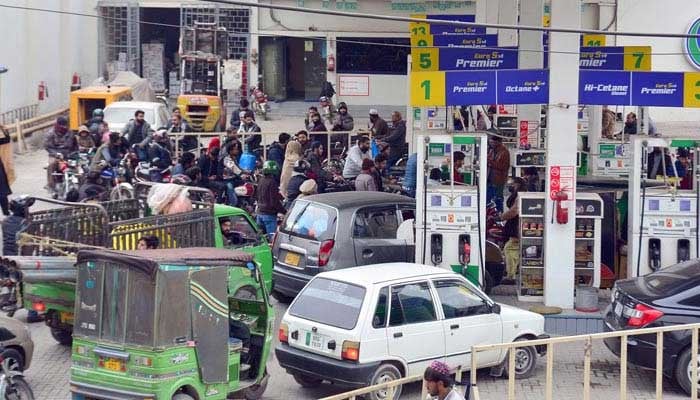
Authorities are considering two primary options to manage the crisis. The first is to pass the full impact of international price hikes directly to consumers. The second, and more complex, involves implementing a targeted subsidy program. This program would provide relief for motorbikes (up to 20 litres) and three-wheelers (up to 30 litres), estimated to cost Rs300 billion over a four- to six-week period.
A critical consultative meeting chaired by Federal Finance Minister Muhammad Aurangzeb on Friday laid the groundwork for the upcoming decision. The meeting included key provincial finance ministers and advisers.
High-Level Summit Scheduled
President Asif Ali Zardari, Prime Minister Shehbaz Sharif, and the four chief ministers are set to convene next week to make a final determination on fuel prices. This summit underscores the national urgency of the issue, which threatens to strain both household budgets and the country’s fiscal stability.
The Ministry of Petroleum provided assurances that Pakistan maintains sufficient petroleum stocks to meet domestic demand until at least May 10. However, officials warned of a volatile global market, with projections suggesting oil prices could surge to $150 or even $200 per barrel if geopolitical tensions in the Gulf region persist.
Provincial Perspectives and Technological Solutions
During the consultative meeting, provincial leaders shared diverse views. Sindh Chief Minister Murad Ali Shah emphasized the importance of fuel conservation measures. Punjab’s Senior Minister Marriyam Aurangzeb stressed the need for multiple policy scenarios and insisted that any future reductions in international prices must be passed on to consumers.
Khyber Pakhtunkhwa’s Finance Adviser, Muzammil Aslam, suggested that any provincial contribution should be based on actual fuel consumption data, requesting the Centre to calculate usage per province. He also noted that Pakistan’s supply management had been more effective than that of several regional counterparts.
A significant part of the discussion focused on mechanism. The Ministry of Information Technology presented a plan for a technology-driven subsidy framework to ensure transparency. This includes developing a QR code system and a dedicated mobile application, for which the government plans to procure 24,000 smart Android phones.
Fiscal Constraints and Reform Imperative
The Finance Division cautioned that fiscal space is severely limited, confined largely to revenues from the petroleum levy. It warned that any relief measures must be carefully calibrated to avoid destabilizing the macroeconomy.
Finance Minister Aurangzeb framed the crisis as an opportunity for structural reform. He advocated for data-driven decision-making in taxation and subsidy design to improve targeting and efficiency. “The current situation should be treated as an opportunity to undertake structural reforms rather than a constraint,” he stated, highlighting the need for policies that are both fiscally prudent and effective in providing public relief.
The meeting concluded with an agreement to expedite the finalization of a targeted subsidy framework, ensuring continued coordination between federal and provincial governments as Pakistan navigates this economic challenge.