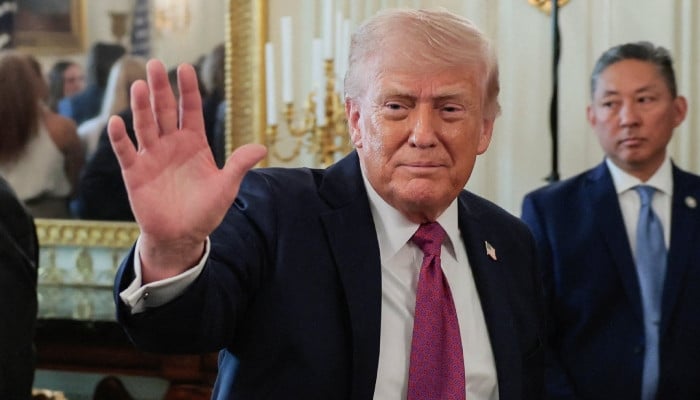
President Donald Trump has indicated that a second round of negotiations between the United States and Iran could take place as early as Friday, according to a report from the New York Post. The development comes as a fragile ceasefire continues, with both sides locked in a standoff over key issues, particularly the status of the Strait of Hormuz.
When asked by the New York Post about reports from Pakistan—which mediated the first round of talks—suggesting a second round was “expected in Islamabad within the next 36 to 72 hours,” Trump reportedly responded via text message: “It’s possible!”
Ceasefire Extension Amid Uncertainty
Trump announced Tuesday that he was extending a two-week truce in the conflict, just as it was about to expire. In a post on Truth Social, the president said he was acting at the request of Pakistan to hold off attacks until Iranian leaders could submit what he called a “unified proposal.”
However, a source briefed on the matter told Reuters that Trump has not set a definitive timeline for the ceasefire extension, adding to the uncertainty surrounding the peace process.
Strait of Hormuz Remains Flashpoint
The core obstacle to a permanent resolution remains the Strait of Hormuz, a vital global shipping route. Tehran closed the strait to all traffic after the US and Israel began strikes across Iran on February 28. In retaliation, Iran also launched strikes against Israel and US bases across the Middle East.
While Washington has announced members of its delegation for the second round of talks, Tehran has made its position clear: it will return to the negotiating table only after the US lifts its naval blockade of Iranian ports.
“As soon as they lift the blockade, the next round of negotiations will be held in Islamabad,” Iran’s Ambassador to the UN Amir-Saeid Iravani told Al Jazeera.
Pakistan Continues Mediation Efforts
Islamabad remains a key mediator in the conflict. Pakistani authorities say they are in constant communication with Iranian leadership, pursuing a path of diplomacy and dialogue. However, a formal response from Iran regarding its delegation for the next round of talks is still pending, according to Information Minister Attaullah Tarar.
“Formal response from Iranian side about confirmation of delegation to attend Islamabad Peace Talks is still awaited,” Tarar wrote on X.
Iran Acknowledges Pakistan’s Role
Iran’s foreign ministry spokesperson Esmaeil Baqaei said Wednesday that the Islamic republic appreciates Pakistan’s efforts to end the Middle East war. When asked by journalists about the ceasefire extension, Baqaei stressed that while Tehran is grateful for Pakistan’s role, it “is taking the necessary measures to safeguard Iran’s national interests and security.”
The fighting that led to the current crisis ended on April 8 when Prime Minister Shehbaz Sharif announced a two-week ceasefire and invited both sides to Islamabad for talks. Those initial negotiations concluded without a deal on a permanent end to the conflict, leaving the region in a state of precarious calm.