ENGLISH_SUG: uk-teen-viral-sarcasm-social-media-ban
FOCUSWORD: UK social media ban for under 16s
‘Stare at a Wall’: British Teen’s Viral Sarcasm Captures Mood as UK Moves to Ban Social Media for Under-16sThe decision is unlikely to make him popular in schoolyards across the United Kingdom. Prime Minister Keir Starmer announced on Monday a forthcoming ban on social media access for minors under the age of 16, framing the measure as essential to “protect children,” while acknowledging the immense challenge of enforcement.
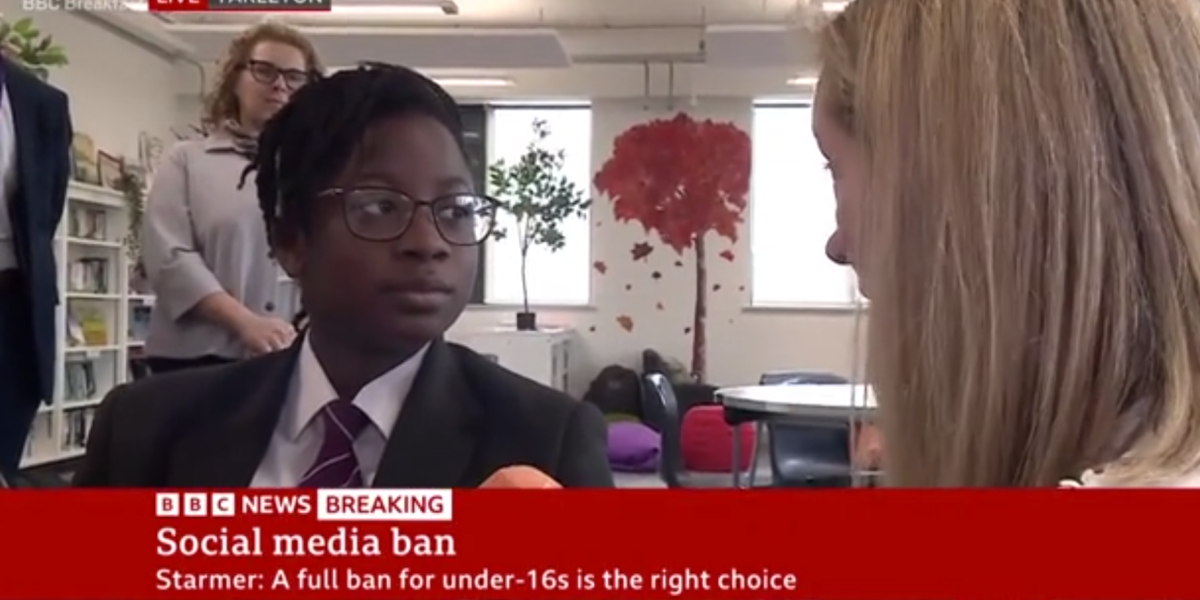
The policy announcement, which follows similar pioneering moves by Australia and Indonesia, and coincides with a French parliamentary debate on a ban for under-15s, has not been met with universal acclaim from its target demographic. The generational divide was perfectly crystallized in a viral BBC interview, where a British teenager responded to the news with a brand of deadpan sarcasm that has since captivated millions.
After telling the reporter she didn’t believe the ban would actually happen and suspected Starmer would “bottle it,” the unimpressed teen was asked what she would do with her sudden surplus of free time. Her iconic, world-weary reply: “Stare at a wall.”
A Viral Moment of Youthful Defiance
The exchange ignited social media, amassing millions of views and a torrent of amused reactions. “Starmer has annoyed every adult in the UK, and now he’s annoying every kid too,” one user on X quipped. Others described the girl’s retort as “hilarious” and “iconic.” Pippa Crerar, a journalist for The Guardian, predicted on X: “This conversation is going to be repeated around kitchen tables across the country tonight.”
The sarcasm and budding hostility, however, are unlikely to deter the Prime Minister. Speaking at a Downing Street press conference just days before a crucial election for his leadership, Starmer described the ban as an “important step” for the nation and its families.
‘Social Media Makes Children Unhappy’
>”Social media makes children unhappy. It facilitates bullying and abuse,” Starmer declared. While many practical details are yet to be finalized, the government hopes to pass the legislation “before Christmas” for it to take effect “early next year, probably around spring.” The ban will target major platforms including Snapchat, TikTok, YouTube, Instagram, Facebook, and X, but will not apply to messaging applications like WhatsApp and Signal.
The UK will also implement measures targeting video game and streaming platforms. These include blocking functions that allow strangers to communicate with a minor under 16, restrictions that will be “on by default” for those under 17. London is also considering “night-time curfews and breaks in infinite scroll functions for under-18s,” and will prohibit minors from using AI chatbots designed to simulate sexual relationships or role-play.
The announcement follows a national consultation, reportedly the second-largest in the country’s history with around 116,000 contributions. According to Downing Street, 91% of participating parents supported such a ban. In a response to AFP, the tech industry body TechUK stated its desire for a “safer online world for children,” but cautioned that the measures “risk displacing the problem rather than actually solving it.”
Enforcement Challenges Loom Large
Starmer conceded that the new rules would be “difficult” to enforce and stressed the continued need to “teach children” how to navigate social media. “Some tech companies want us to believe that social media is immutable and part of an almost natural order. But we must resist this form of powerlessness,” he insisted. While acknowledging the risk that children will “bypass” the regulation, he argued that laws “are also an expression of our values.”
This enforcement challenge was immediately highlighted by the school leaders’ union, which called for “truly effective age verification measures,” noting that the current threshold of 13 is already “difficult to enforce.” As the government prepares to turn its ambitious plan into law, the viral, flippant resignation of one teenager has already framed the cultural battle ahead.