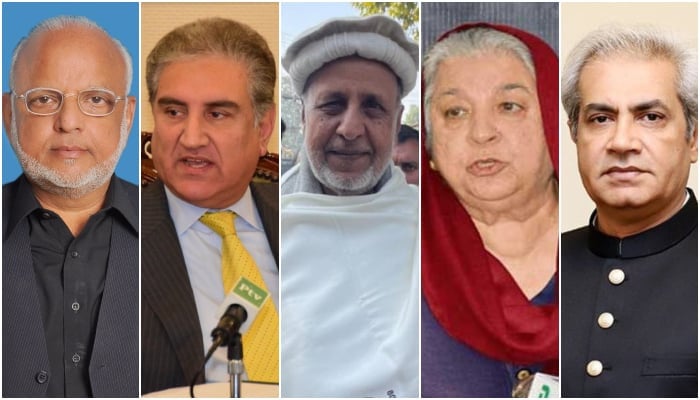
Incarcerated leaders of the Pakistan Tehreek-e-Insaf (PTI) have formally rejected Prime Minister Shehbaz Sharif’s renewed call for a “Charter of Economy,” countering with a demand for a “Charter of Pakistan.” In a letter penned from prison, the senior politicians argued that economic reform is a hollow promise without the prior restoration of constitutional supremacy and political stability.
A Foundational Flaw
The PTI leaders questioned the very premise of the Prime Minister’s proposal. “Pakistan needs a ‘Charter of Pakistan’ before it needs a Charter of Economy,” the letter stated. They posed a pointed question: how can a “Charter of Economy” succeed “when constitutional supremacy exists only in books and both political and economic stability have become distant dreams”?
Drawing a sharp link between governance and growth, the signatories insisted that “economic stability cannot be achieved without political stability.” They elaborated that investment and prosperity only flourish in an environment where the rule of law is absolute and the constitution is more than a symbolic document. “When the constitution carries no more weight than a piece of paper, what practical value can a Charter of Economy have?” they asked.
The ‘Charter of Pakistan’ Framework
To illustrate their point, the jailed leaders used a stark analogy: “There is an old saying that if the water in a well is dirty, changing the bucket will not solve the problem; first, the source of the contamination must be removed.” They argued that the root cause of the national crisis must be addressed before any meaningful reform can take root.
The proposed “Charter of Pakistan” would serve as a grand national compact. According to the letter, it must bring all political forces, state institutions, and centers of power into agreement on the complete supremacy of the constitution. The charter, as envisioned by the PTI leaders, would enshrine several key principles:
- Guaranteeing constitutional supremacy.
- Ensuring the people’s electoral mandate is respected.
- Ending political engineering.
- Confining all institutions to their constitutional boundaries.
- Providing for across-the-board accountability.
- Safeguarding core economic policies from disruption.
“The successful nations of the world first established their political rules of the game and only afterward achieved economic miracles,” the letter concluded. “Political stability gives birth to economic stability, not the other way around.” The PTI leaders ended their message by stating that if the Prime Minister is genuinely serious, he must lay the foundation for a national dialogue on a “Charter of Pakistan” rather than issuing another political statement.