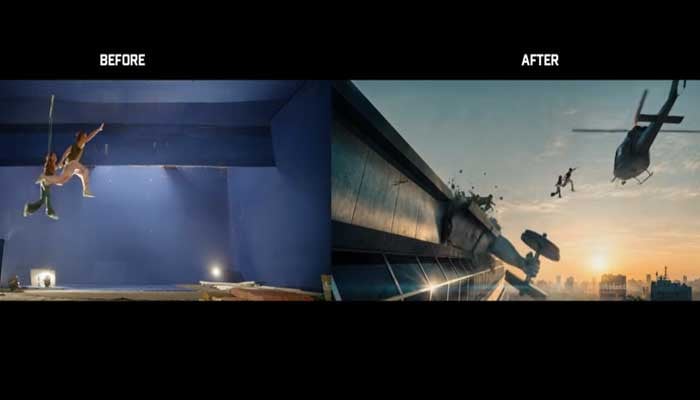
Following its successful theatrical run, the team behind Pakistan’s first zombie survival thriller, Zombeid, has released an official VFX breakdown, pulling back the curtain on the technical wizardry that constructed its post-apocalyptic world. The video provides a rare, behind-the-scenes glimpse into the extensive visual effects work, highlighting a level of creativity and innovation seldom attempted in the country’s film history.
Widely regarded as one of Pakistan’s most ambitious genre films, Zombeid merges large-scale action, visceral horror, and cutting-edge digital artistry. The newly unveiled breakdown from Geo Films and Filmawala Pictures meticulously deconstructs complex sequences, revealing the dedication required to achieve visuals that challenge conventional production boundaries. For many industry observers, this release is more than a technical showcase. It represents a significant milestone, proving that world-class genre filmmaking and sophisticated visual effects can be executed entirely within Pakistan. The breakdown demonstrates how local talent is now capable of delivering the kind of spectacle typically associated with much larger international productions. Directed by Nabeel Qureshi, the film is being celebrated as a landmark production that pushes the limits of local filmmaking infrastructure. The VFX breakdown illustrates the layered process of environment creation, digital creature design, and complex compositing that brought hordes of the undead to life. Industry insiders suggest this transparency will inspire a new wave of technically demanding projects, paving the way for more ambitious storytelling in the region. The release underscores a growing evolution within the Pakistani film industry, signaling that the gap between local capabilities and global standards is rapidly closing. By sharing the intricate work behind the film’s most challenging shots, the Zombeid team is not only celebrating its own success but also setting a new benchmark for what is achievable in South Asian cinema.Pushing Technical Boundaries