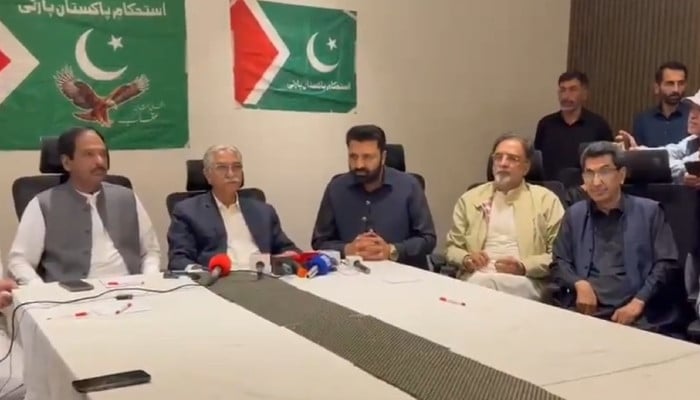
GGIT: The political landscape of Gilgit-Baltistan solidified on Sunday as the Istehkam-e-Pakistan Party (IPP) formally announced its support for the Pakistan Peoples Party (PPP) in forming the region’s next coalition government. The move creates a tripartite alliance that also includes the Pakistan Muslim League-Nawaz (PML-N), following a rapid series of power-sharing negotiations.
Leaders from the IPP and PPP unveiled the partnership during a joint press conference Gilgit, just one day after the PPP and PML-N finalized their own formula for dividing key constitutional offices.
A Path to Prosperity
“We will join the PPP-led alliance,” declared Haji Gul Bar Khan, the IPP’s Gilgit-Baltistan president, confirming the party’s entry into the ruling coalition. He noted that the finer details of the arrangement would be settled by the central leadership of the respective parties.
Framing the alliance as a catalyst for regional development, PPP Gilgit-Baltistan President Amjad Hussain described the coalition as a “positive development” destined to put the region on the path of progress and prosperity. Hussain further announced that the formal process of government formation is set to commence on Monday.
Power-Sharing Blueprint
The agreement comes after the PPP emerged as the single largest party in the June 7 general elections, securing nine seats in the 24-member legislative assembly. The PML-N followed with six seats, according to official results for 21 constituencies, while the IPP failed to win a seat directly. However, the IPP’s legislative strength was bolstered on June 16 when four independent candidates joined the party during a meeting with Communications Minister and IPP President Abdul Aleem Khan.
The previously announced power-sharing arrangement between the PPP and PML-N stipulates a clear division of top posts:
- The office of the Chief Minister will be held by the PPP.
- The position of Governor will go to the PML-N.
- The PML-N will also take the roles of Leader of the Opposition and Deputy Speaker of the Assembly.
Both parties stated that the formula was reached through mutual consensus following a detailed consultative process within their respective organizations. With the IPP now officially on board, the path is clear for the alliance to stake its claim to govern the strategic northern region, with the process beginning imminently.