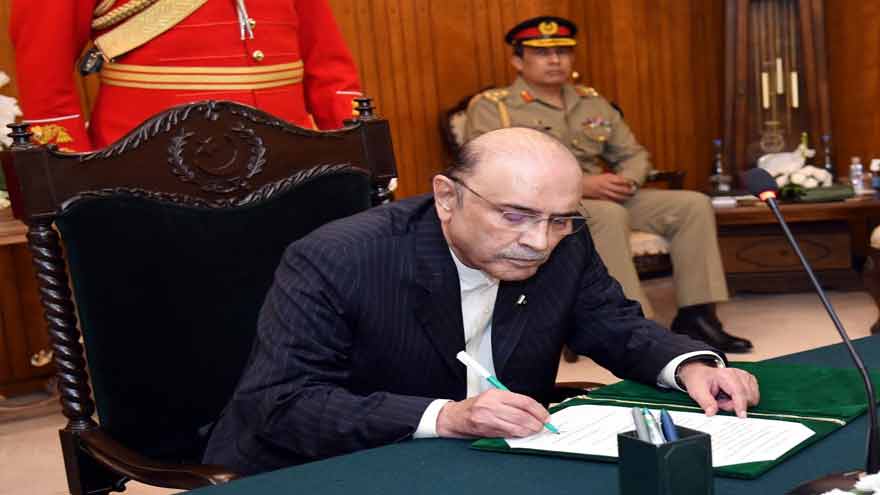
ISLAMABAD — In a significant move to reshape the governance of the nation’s energy sector, President Asif Ali Zardari on Tuesday formally signed the Oil and Gas Regulatory Authority (OGRA) Amendment Ordinance 2026 into effect. The presidential assent, confirmed by an official statement from the President House marks a decisive legal amendment to the foundational ordinance that has governed the regulatory body for over two decades.
The newly enacted ordinance specifically targets sections 2 and 3 of the Oil and Gas Regulatory Authority Ordinance 2002. While the precise textual modifications were not immediately detailed in the official communiqué, the legislative action was taken on the advice of the prime minister, underscoring the executive branch’s direct role in fast-tracking regulatory reforms through the ordinance mechanism.
Executive Authority and Legislative Fast-Tracking
>The issuance of an ordinance allows the government to enact laws immediately when parliament is not in session, pending retrospective approval. This procedural path signals the urgency with which the administration views the need to update the legal parameters surrounding the country’s oil and gas regulatory apparatus. Legal experts note that amendments to the definitional and establishment clauses of an authority’s governing statute often precede broader structural or functional overhauls.
The OGRA Ordinance 2002 originally established the authority to foster competition, increase private investment, and protect public interest in the midstream and downstream petroleum sectors. Tuesday’s amendment is expected to recalibrate these foundational definitions to align with contemporary energy market dynamics and policy objectives.