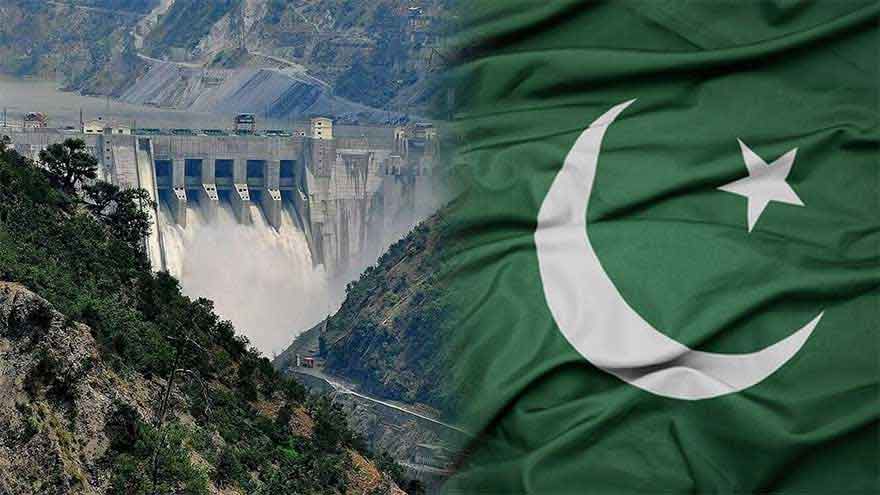
ISLAMABAD — Pakistan on Tuesday issued a forceful reaffirmation of its commitment to safeguarding its water rights under the Indus Waters Treaty (IWT), describing the 1960 accord not merely as a bilateral agreement but as an existential lifeline for its 240 million citizens. The declaration came during an international seminar in the capital, where senior government officials, legal experts, and foreign delegates convened to underscore the treaty’s role in maintaining regional stability.
The event, titled “Indus Waters Treaty: Key Instrument of Peace and Regional Stability,” gathered Deputy Prime Minister Ishaq Dar, Pakistan Peoples Party Chairman Bilawal Bhutto Zardari, and a host of federal ministers alongside water specialists. The unified message was clear: any attempt to disrupt Pakistan’s allocated water flows would be met with a resolute response.
Water as the Nation’s Identity
Minister for Information and Broadcasting Attaullah Tarar opened the proceedings by framing the discussion around national identity and survival. “Water is not just a natural resource for Pakistan; it is a matter of life,” Tarar stated. He anchored the country’s heritage in the Indus Valley Civilization, calling the river the true definition of the Pakistani people. “Whenever I go abroad, I always tell my counterparts that we are the people of the Indus Valley civilization,” he said.
Tarar stressed that the treaty, forged over six decades ago, remains one of the world’s most durable water-sharing mechanisms. He warned, however, that India’s unilateral suspension of the agreement threatened the foundation of trust between the two nuclear-armed neighbors. “If any attempt was made to block Pakistan’s water, the country’s leadership was fully prepared to respond effectively,” Tarar declared, urging that water must serve as a source of cooperation, not conflict.
Legal and Humanitarian Dimensions
Indus Waters Commissioner Syed Mehr Ali Shah provided a technical and legal dissection of the crisis, stating that the treaty is a lifeline intrinsically linked to Pakistan’s agriculture, food security, and economy. He noted that the agreement contains a comprehensive dispute resolution mechanism, which Pakistan has successfully invoked twice before the Court of Arbitration.
Shah revealed that India has failed to implement the treaty since August 2023 and has not shared mandatory hydrological data. “Pakistan had once again written to India a day earlier, requesting the required data,” he said. The commissioner specifically cited India’s plans to divert the flow of the Chenab River as illegal, asserting that Pakistan would not permit any diversion of its allocated share. “Water is intrinsically linked to human life and must never be used as a weapon,” Shah maintained.
International law expert Ahmer Bilal Soofi reinforced this position, calling India’s suspension of the treaty contrary to international law and the UN Charter. He argued that New Delhi was attempting to link the water-sharing accord with unrelated political disputes, including the status of Jammu and Kashmir. “Access to water, clean air, and food is recognized globally as a fundamental human necessity,” Soofi said, urging greater dialogue between legal experts from both nations.
Control, Not Scarcity, the Central Issue
Federal Minister for Climate Change Dr. Musadik Malik shifted the focus to the weaponization of water flow control. He clarified that the real challenge was not water scarcity but the manipulation of river flows by the upper riparian state. “Controlling water resources amounts to using them as a weapon,” stated, pointing to sharp, dangerous fluctuations in water levels at the Marala Headworks caused by releases from India.
Malik warned that the consequences of disrupted river systems extended beyond Pakistan, affecting downstream neighbors like Bangladesh. He praised the resilience of the 1960 treaty, noting it survived three wars, but cautioned that its collapse would undermine confidence in international treaties worldwide. “No country should be allowed to hold regional or global peace hostage,” he said.
Civilizational Heritage at Stake
Former federal minister Khurram Dastgir took a stern line, alleging that India is actively using water as a weapon in violation of the treaty. He claimed that the Indian leadership had threatened that Pakistan would not receive “a single drop” of water and accused New Delhi of releasing large volumes of water without notification, affecting 7.3 million people. “Depriving large populations of water and food constitutes a serious violation of international norms,” Dastgir said, vowing that Pakistan would protect its share of water and its civilizational heritage at all costs.
Russian international affairs expert Dr. Roxolana Zygon also expressed concern, warning that dam construction in India’s upstream areas could heighten regional tensions. She stressed that the treaty contains no provision for unilateral withdrawal and that cooperation over shared water resources remains essential for lasting peace. The seminar concluded with a unified call for the international community to recognize the Indus Waters Treaty as a vital pillar of regional stability that must not be undermined.