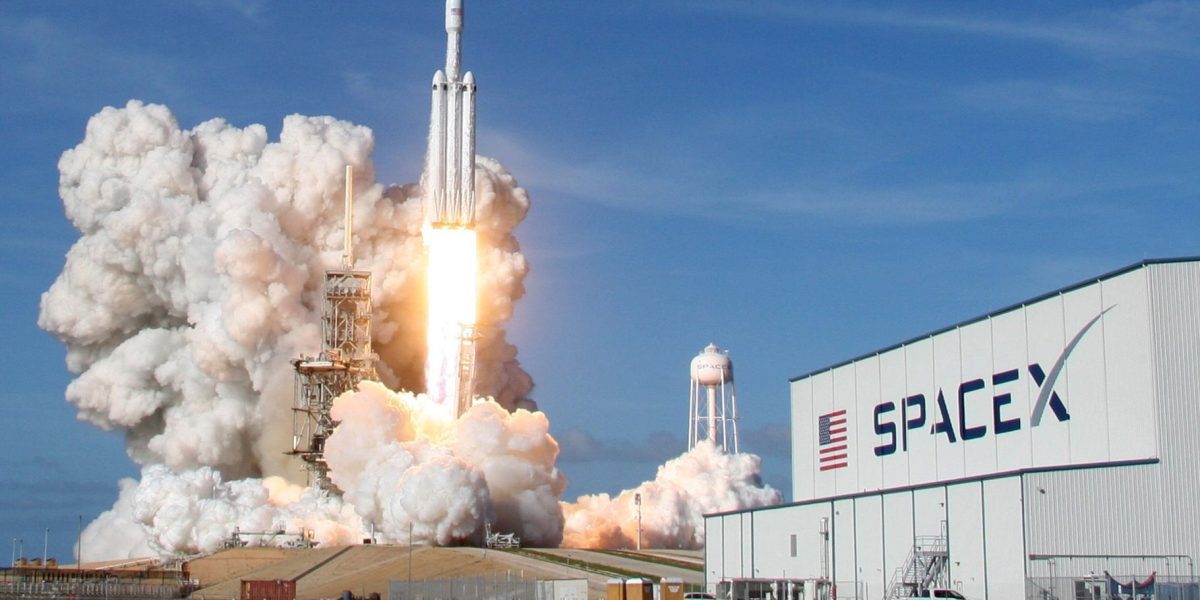
A discarded upper stage from a SpaceX Falcon 9 rocket, adrift in space for months, has slammed into the lunar surface, scientists confirmed on Wednesday. The unintentional collision, observed by a powerful telescope in Chile, marks a rare instance of a human-made object striking another celestial body and provides an unexpected scientific opportunity.
The impact occurred exactly as predicted, at approximately 8:35 a.m. Paris time. The European Southern Observatory’s (ESO) Very Large Telescope in Chile captured the immediate aftermath, detecting distinct spectral lines that revealed the chemical makeup of the resulting debris cloud.
“The sodium likely comes from the lunar soil, while the lithium could come from the rocket itself,” the ESO detailed in a social media post, describing the chemical fingerprints observed in an impact plume that persisted for five to ten minutes after the crash.
A Bus-Sized Bullet at 8,690 km/h
The rogue object was the upper stage of a Falcon 9 rocket, roughly the size of a bus. It launched in January 2025 carrying two lunar landers. While the first-stage booster successfully returned to Earth, the upper stage remained in space, its mission complete, becoming one of thousands of pieces of orbital debris.
Benjamin Fernando, a researcher at Los Alamos National Laboratory and lead author of a recent study on the anticipated collision, confirmed the impact. His team had calculated that the four-ton object, assuming all fuel was spent, would strike at a blistering speed of 8,690 km/h near the Einstein crater in the Moon’s northern hemisphere.
Julianna Scheiman, a SpaceX official, explained at a NASA press conference earlier this week that “a mix of solar activity and gravitational forces ultimately set it on a collision course with the Moon,” despite standard operational precautions.
No Danger to Earth, But a Scientific Windfall
Prior to the crash, NASA assured there was “no danger to Earth.” Instead, the agency views the event as a research opportunity. “NASA scientists plan to collect lunar data from this event to refine techniques for tracking objects in space the agency stated.
Both NASA’s Lunar Reconnaissance Orbiter and the Korea Pathfinder Lunar Orbiter are expected to maneuver to image the fresh impact crater. However, those images may take several days to be received and processed.
This accidental experiment allows scientists to study dust plumes and better assess the risks posed by artificial space debris, a critical issue as NASA works toward establishing a sustained human presence on the Moon. While the Moon is frequently bombarded by natural meteoroids, impacts from artificial objects are far less common. The last intentional impacts were conducted by NASA during the Apollo program in the 1970s to gather seismic data.
The Growing Threat of Space Junk
The crash underscores the escalating problem of orbital debris. According to the European Space Agency, more than 46,000 pieces of debris, weighing a combined 17,000 tons, are currently in orbit, as of late July. Experts have long warned that this accumulation could trigger a dangerous chain reaction of collisions known as Kessler Syndrome, which would render near-Earth space unusable.
The data gathered from this lunar impact will not only reveal details about the Moon’s surface but also contribute to the global effort to monitor and mitigate the threats posed by humanity’s growing cloud of space junk.