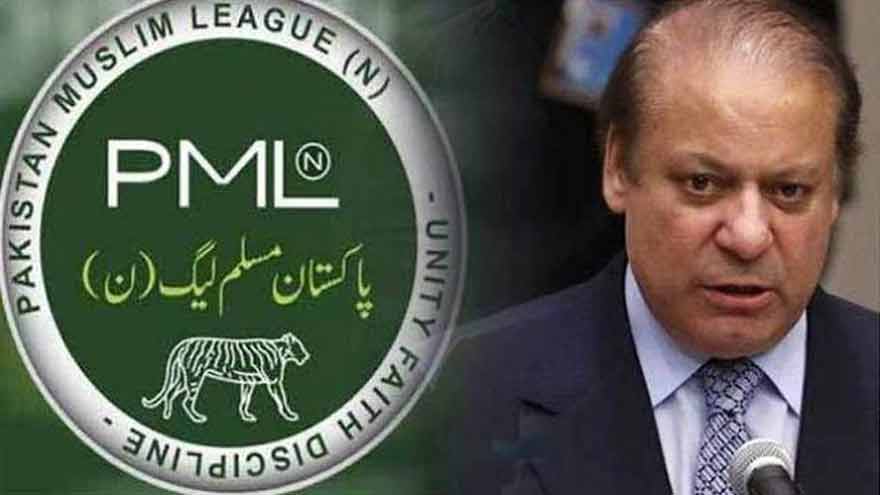
The political DNA of the Pakistan Muslim League-Nawaz (PML-N) is woven directly into the founding fabric of the nation. The party’s narrative is not merely one of contemporary electoral politics but a story that begins with the historical struggle of South Asian Muslims, tracing a direct lineage to the All-India Muslim League, the architect of Pakistan itself.
The foundational chapter was written on December 30, 1906, when Muslim leaders convened in Dacca to form a political platform designed to protect the interests of Muslims under British colonial rule. This entity, the All-India Muslim League, became the vessel for a destiny. The intellectual framework for a separate homeland was articulated by Allama Muhammad Iqbal during the League’s 1930 annual conference, where he addressed the political and economic challenges facing the community.
From Resolution to Reality
The vision crystallized into a concrete demand under the stewardship of Quaid-e-Azam Muhammad Ali Jinnah. On March 23, 1940, in Lahore, the League adopted the historic Pakistan Resolution, pledging an unwavering struggle for an independent state. The subsequent political and democratic campaign proved seismic; within seven years, the map of the world was redrawn with the emergence of Pakistan on August14, 1947.
In the wake of independence, the party transformed into the Pakistan Muslim League, steering the nascent state through precarious early years. However, the democratic trajectory was severed when martial law was imposed in 1958, forcing the party into the political wilderness under successive military regimes.
The Nawaz Sharif Revival and Economic Overhaul
The party’s modern resurgence is inextricably linked to Muhammad Nawaz Sharif, under whose leadership it re-emerged as a dominant force in the 1990 elections. By February 1997, the PML-N had secured a two-thirds majority, achieving the unique distinction of winning representation across all provinces.
The party’s governance philosophy was defined by aggressive economic liberalization. Its first tenure prioritized deregulation and privatization to stimulate business. The second tenure focused on deep structural reforms, granting autonomy to the State Bank of Pakistan and introducing professional management in state-controlled banks. Parallel reforms swept through capital markets and the agricultural sector.
Bricks, Mortar, and a Nuclear Milestone
The PML-N’s developmental footprint is etched into the country’s physical landscape. The party launched the Tameer-e-Watan programmes for grassroots employment and executed mega-projects that transformed national connectivity and energy security. This infrastructure blitz included the Lahore and Karachi airports, the motorway network, the Makran Coastal Highway, the Gwadar deep-sea port, the Ghazi-Barotha Hydel Project, and the Chashma Nuclear Power Plant.
Social initiatives complemented the concrete, ranging from the electrification of villages and construction of farm-to-market roads to free treatment for impoverished kidney patients and the distribution of state land to the landless. The development of a digital fibre-optic telecommunications network also marked an early stride toward technological modernization.
Yet, the defining moment of the PML-N’s tenure remains Pakistan’s decision to conduct nuclear tests on May 28, 1998. Despite intense international pressure, the tests established the country as a declared nuclear power, a decision the party’s leadership holds as a cornerstone of national security.
A Struggle for Democracy
This governing arc was violently disrupted on October 12, 1999, when a military coup toppled the elected government. The PML-N subsequently reframed its political mission, launching a prolonged campaign under Nawaz Sharif for the restoration of democracy, constitutional supremacy, and civilian institutions. The party asserts that this struggle and its principled stance have cemented its identity as a symbol of genuine democratic restoration in the country.