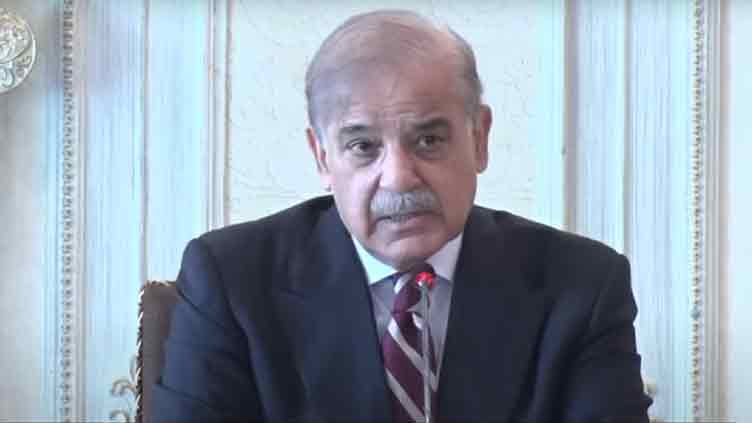
Prime Minister Shehbaz Sharif has moved to clarify the strategic intent behind the newly inked Makkah Joint Defence Agreement, asserting that the trilateral pact between Pakistan, Saudi Arabia, and Turkiye is strictly a defensive framework designed to foster regional stability and collective prosperity. The agreement, signed in the holy city on August 7, has drawn significant international attention, prompting the premier to address its core objectives directly with the federal cabinet.
A Defensive Pillar for Collective Security
In a detailed briefing, PM Shehbaz dispelled any notion that the agreement could be interpreted as an offensive coalition. “Its purpose is definitely not that any aggression occurs. It is entirely for defensive purposes, for peace, tranquillity and progress in the region,” he emphasized. The prime minister framed the pact not merely as a military arrangement but as a comprehensive source of strength intended to benefit the broader Muslim world, extending its protective umbrella beyond the three signatory states.
The premier acknowledged the long diplomatic and military efforts that culminated in the Makkah signing. He noted that the current framework builds upon existing bilateral security foundations, specifically mentioning the Strategic Mutual Defence Agreement established between Pakistan and Saudi Arabia in September 2025, and the decades-long defence cooperation between Pakistan and Turkiye. He extended personal congratulations to Deputy Prime Minister Ishaq Dar and Chief of Defence Forces Field Marshal Asim Munir for their roles in finalizing the landmark deal.
Legal Foundations and Historical Ties
Foreign Minister Ishaq Dar reinforced the defensive character of the agreement on the international stage, linking its core principle to the United Nations Charter. He stated that the collective defence clause—where an attack on one signatory is considered an attack on all—is fully consistent with the inherent right of individual and collective self-defence enshrined in Article 51. This legal anchoring serves to underline the pact’s legitimacy as a stabilizing mechanism rather than a provocative alliance.
Prime Minister Shehbaz also invoked the deep historical ties binding the nations, particularly Pakistan’s enduring role in the defence of Islam’s holiest sites. He recalled that Pakistan’s armed forces have historically stood shoulder-to-shoulder with Saudi forces to protect Makkah and Madina, characterizing the new trilateral agreement as a natural and necessary extension of that long-standing sacred cooperation.
Regional Reception and Global Backing
The diplomatic response to the pact has been largely positive. The 57-member Organisation of Islamic Cooperation has welcomed the development as a significant strategic step. Regional powers including Kuwait, Bahrain, and Somalia have also voiced their support. Significantly, Iran has responded with a positive tone, reiterating its preference for regional security mechanisms based on cooperation among the region’s own countries, a signal that the defensive framing of the pact is being received as intended.
The agreement marks a pivotal moment in the strategic alignment of three major Sunni-majority powers, promising a new architecture for security cooperation that Islamabad insists is open to other regional nations and is fundamentally a guarantor of peace, not a harbinger of conflict.