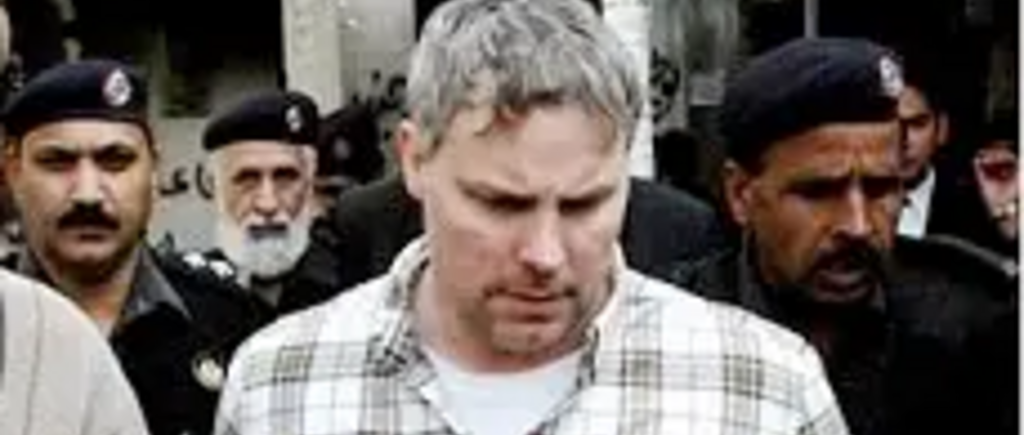
On the evening of January 27, 2011, an unusual scene unfolded at the Old Anarkali Police Station in Lahore. A foreign national was being interrogated over allegations of killing two young men. Over the following weeks, this incident would escalate into a diplomatic crisis between Pakistan and the United States. The man in question was Raymond Davis, an American citizen, who later detailed the events in his book, *The Contractor*.
During the interrogation, when Raymond was asked if he worked for the U.S. Embassy, he realized revealing his true role would be difficult. Hours earlier, he had fired 10 rounds from his Glock 17 automatic pistol at two young men, Muhammad Faheem and Faizan, who were riding a motorcycle in the Mozang area. In his book, Raymond recounts being questioned about his employer. When asked if he worked for the U.S. ambassador, he decided against disclosing his actual role and simply identified himself as a “consultant.”
Following his arrest on January 27, Raymond Davis spent 49 days in Pakistani custody. The case quickly became an international sensation, with Pakistani and global media covering it extensively. On March 16, a Sharia court in Lahore ordered Raymond’s release after $2.4 million in blood money was paid to the victims’ families.
In his book, co-authored with Storms Reback, Raymond provides a detailed account of the incident. According to him, while stuck in traffic at a Lahore intersection, one of the two men on a motorcycle pulled out a gun and aimed it at him. Raymond, a trained security contractor, immediately drew his weapon and fired 10 shots, killing both men. He writes that he feels no remorse for the killings, as his sole aim was to return safely to his family.
After Raymond’s arrest, a U.S. consulate vehicle arrived to secure his release but ended up hitting another motorcyclist while driving on the wrong side of the road, raising the death toll to three. Raymond was initially held at a military cantonment before being transferred to Kot Lakhpat Jail. U.S. officials made significant efforts to secure his release, especially as the U.S. had already discovered Osama bin Laden’s presence in Pakistan and was preparing for an operation against him.
U.S. President Barack Obama declared Raymond a “diplomat,” claiming he had immunity under the Vienna Convention. However, author Shuja Nawaz argues that Raymond’s diplomatic status could not be proven, as his name did not appear on any official State Department list.
The $2.4 million blood money paid to the victims’ families facilitated Raymond’s release. During the court proceedings, the families were reportedly kept under gunpoint outside the courtroom and instructed to remain silent in front of the media. Once the legal process concluded, Raymond was taken to Lahore Airport, where a Cessna aircraft awaited him.
According to Raymond’s book, he was tasked with protecting U.S. Embassy personnel in Pakistan. He claims to have worked directly with the U.S. government, securing contracts for security services. However, he concealed his past ties to Special Forces from Pakistani authorities, fearing he might be labeled a spy.
The incident marked a significant turning point in Pakistan-U.S. relations, exacerbating tensions between the two nations. The case not only highlighted the complexities of diplomatic immunity but also underscored the fragile nature of bilateral ties during a critical period in the region’s history.