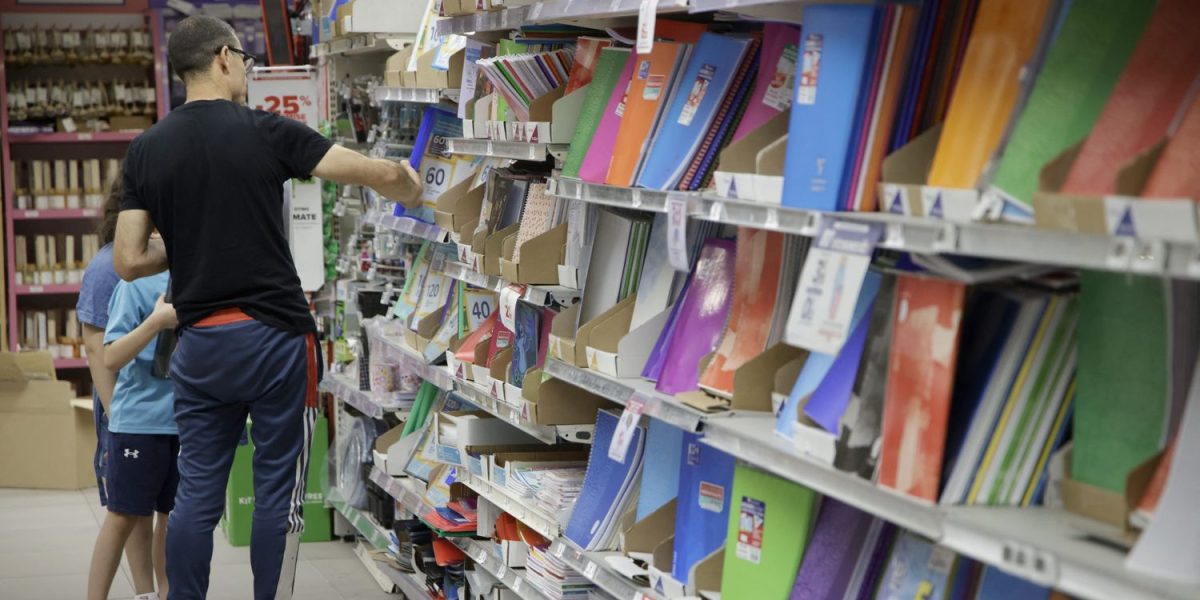
The financial strain of back-to-school shopping has eased for French families this year. According to a new study by the federation of associations Familles de France, the average cost of school supplies for a student entering sixth grade in 2026 has fallen to 180.8 euros. This marks a significant decrease of 30.3 euros, or 14.35%, compared to the 211.1 euros recorded in 2025.
The report, published on Wednesday, August 19, brings a rare piece of positive news for household budgets. “The 2026 edition of our survey provides encouraging information,” the federation stated. It noted that the evolution reflects “a significant reduction in the budget required by families,” even though back-to-school expenses remain a considerable outlay for many households.
Sports Equipment Leads the Price Drop
The study breaks down the cost of a standard school supply basket into three main categories. Non-paper supplies, which include items like pens, rulers, and calculators, represent the largest expense. This category averages 92.23 euros, accounting for 51% of the total basket.
The most dramatic price decrease, however, was seen in sports equipment. The average cost for these items fell to 45.87 euros, a drop of 14.64 euros or 24.2% in a single year. In contrast, paper-based supplies remained virtually stable, with an average cost of 42.7 euros, a marginal increase of 0.33% from 42.56 euros in 2025.
Familles de France conducted its research during the second half of July by tracking prices for a list of 47 school-related items. This list comprised 11 paper supplies, 33 non-paper supplies, and three sports articles.
Inflation Context Remains Mixed
The drop in school supply costs comes amid a broader inflationary environment. Data from the French National Institute of Statistics and Economic Studies (Insee) confirmed an annual inflation rate of 2.1% for July. Consumer prices accelerated from a 1.8% increase in June, driven primarily by rising energy and service costs.
Energy prices saw the steepest surge, climbing 12.6% year-on-year in July, up from an 11% increase in June. This spike is attributed to geopolitical tensions in the Middle East and subsequent difficulties in hydrocarbon supply chains.
Despite these pressures, the back-to-school sector has bucked the trend, offering a welcome reprieve for parents preparing for the new academic year.